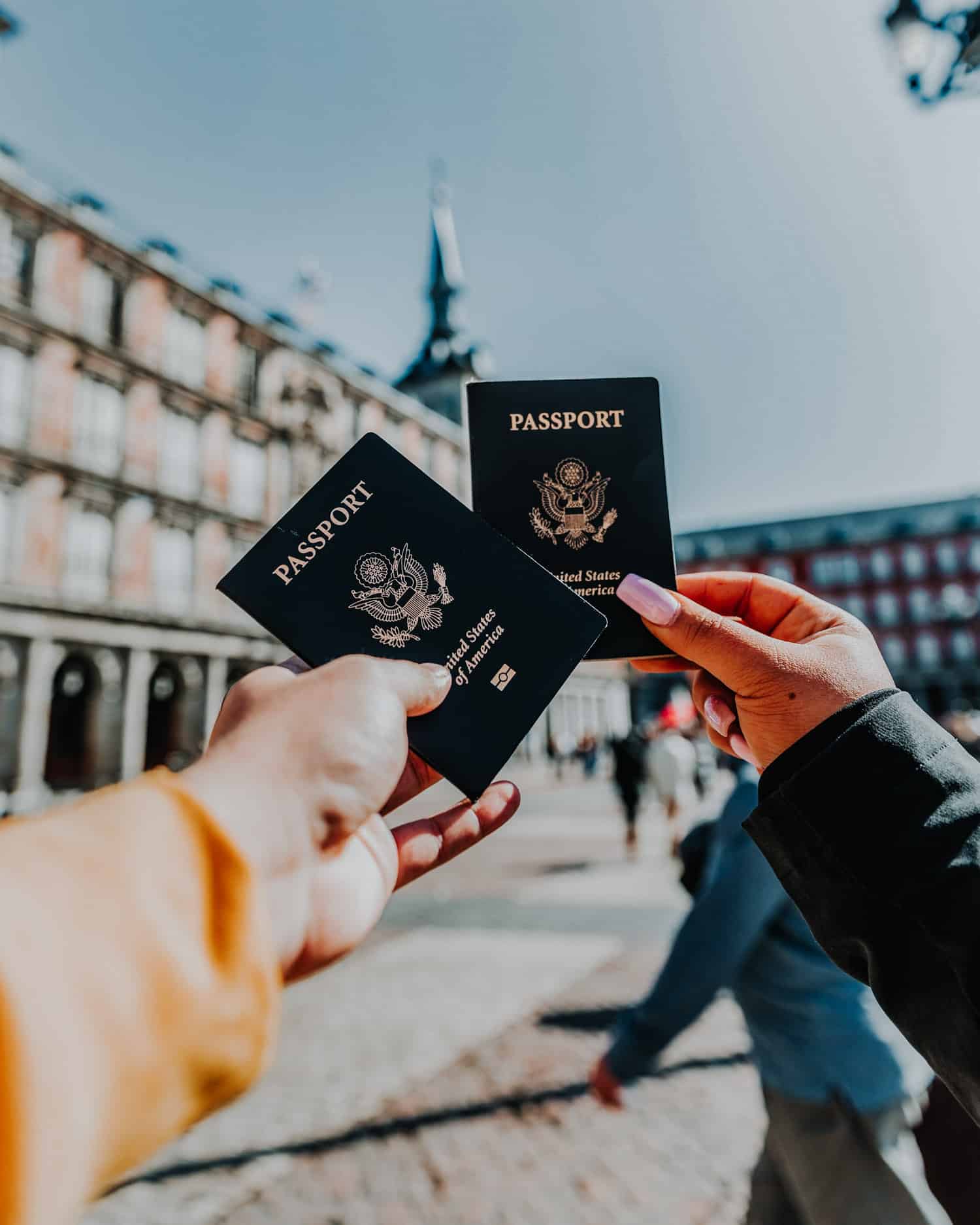
Why You Need an eSIM for Your Trip to Europe

Heading to Europe? Before you jet off, there’s one essential thing you can’t overlook: how you’re going to stay connected.
You see, you could buy a SIM card at the airport, but if you’re travelling to multiple cities in Europe, that isn’t going to work.
Over the years, I’ve been promised countless times that this SIM is going to work outside of Spain, France, Germany etc.
…But as soon as I cross the border, my connection to the outside world goes out the window and finding my hotel becomes a stress-filled adventure.
So, what’s the solution?
Allow me to introduce you to your new BFF, the eSIM.
But before I dive into way it’s going to be your new favourite travel accessory, let’s take a few steps back and unpack why staying connected in Europe isn’t seamless.
Psst…Want more travel tips for Europe? Check out these other posts:
- 3 Insanely Cheap Ways to Travel Europe in 2024
- 16 of the Best Rand-Friendly Holiday Destinations in Europe
- How To Travel Europe on a Budget: A Complete Guide
- 50+ Genius Ways To Save Money for Travel
- Meet Lake Eibsee: The Best-Kept Munich Day Trip
- How to Get From Munich to Neuschwanstein Castle Without a Car
Why Europe Requires Multiple SIM Cards

On the surface, Europe seems like a giant travel playground.
You’ve got dirt-cheap flights with budget airlines, trains connecting you to almost every major city, and a seemingly endless list of overnight bus routes.
The biggest problem that will get in the way of your plans, though?
Unlike Europe’s transportation systems, mobile networks are far from unified.
Every time you cross a border, you’ll need to deal with different mobile networks. That means swapping out SIMs every. single. time.
While it’s easy enough to find a local SIM in each country, it’s not easy on your wallet. Plus, it’s time-consuming, especially if you’re country hopping every couple of days.
Instead of collecting physical SIMs like souvenirs, switch to an eSIM.
It’s completely virtual (and environmentally friendly), allowing you to switch between networks with ease.
And the best part? You only have to buy it ONCE.


What Exactly Is an eSIM and How Does It Work?

An eSIM, or embedded SIM, is a virtual SIM card that works on devices like smartphones and tablets. Unlike a regular SIM card, it doesn’t need to be physically inserted into your phone. Once you purchase an eSIM, the profile is downloaded directly to your device, giving you instant access to local networks.
What does that mean for your travel plans?
You can connect to different networks across multiple countries without ever swapping a SIM card.
Heading from Italy to Switzerland? Your phone can automatically switch to a new network, keeping you connected without skipping a beat.
Hello, my new favourite travel companion!


The Time & Cost-Saving Benefits of an eSIM

If there is one thing I love talking about more than travel, it’s money.
When you’re travelling (whether it’s short-term or long-term), every penny counts.
Especially in Europe when you’re a South African converting Rands into Euros.
Using your home country’s SIM card in Europe is not an option unless you’re okay with using your Aperol Spirtz budget for hefty international roaming charges.
An eSIM, on the other hand, is a cost-effective option.
All you need to do is purchase your prepaid data plan that works across multiple countries, turn your eSim on, and you’re good to go. It works out cheaper than stockpiling local SIMs, and you can easily top-up your SIM from your phone.
Gone are the days of having to dial a number or visit a mobile network branch.
You now have more time (and money) for the things that matter:
With an eSIM, you can connect to the best available network in each country without lifting a finger.
You can even pre-purchase your eSIM before you leave, so your phone will be ready to go the moment your plane touches down. There’s no need to visit a mobile store upon arrival, stand in line, or deal with language barriers to get a local SIM card.


Why Truely is Your Best eSIM Option for Europe & Beyond
When it comes to choosing an eSIM Europe plan, I highly recommend using Truely.
Unlike some of the other eSIM providers, you don’t have to get a new eSIM once your package runs out.
What does this mean?
In the past, I’ve had to buy an eSIM for Thailand, Morocco, France and Germany, but I couldn’t use the same eSIM. I had to install a new one each time. So I essentially had a burner eSIM for each trip.
Truely doesn’t work like that.
It’s 100% switchless which again, saves time and makes the whole experience seamless. You only need ONE eSIM for Japan, Europe, Australia etc.
Besides that, this is everything else you can expect from a Truely eSIM:
- Available in 200+ destinations and regions
- Flexible data plans and top-ups
- Hotspot/tethering allowed
- Always ON: stay connected without an active plan
Side Note: I cannot stress enough how important the hotpot/tethering functionality is if you’re a remote worker like me. While working from Europe for two months, I had a train journey from Munich to Berlin and scheduled a meeting during that time. Unfortunately, my eSIM didn’t allow me to use my mobile hotspot for my laptop, and the train’s WiFi was not working. That caused a lot of unnecessary problems for me at work because it was never a feature I thought I would need to check for.


Final Thoughts on eSIMs for Europe Travel
If you’re planning a European trip that takes you across borders, adding an eSIM to your travel toolkit is a no-brainer. You get the convenience of staying connected without swapping physical SIM cards, and you also save money by avoiding international roaming charges. With Truely, you’re getting an eSIM provider that makes the process seamless, from activation to data usage management.
So, get ready to say goodbye to SIM card headaches and hello to smooth, uninterrupted connectivity on your next European adventure!
Got any questions about eSIMs and travelling in Europe? Hit ya gurl up in the comments below!