
Whale Trail Hike in South Africa: Everything You Need to Know
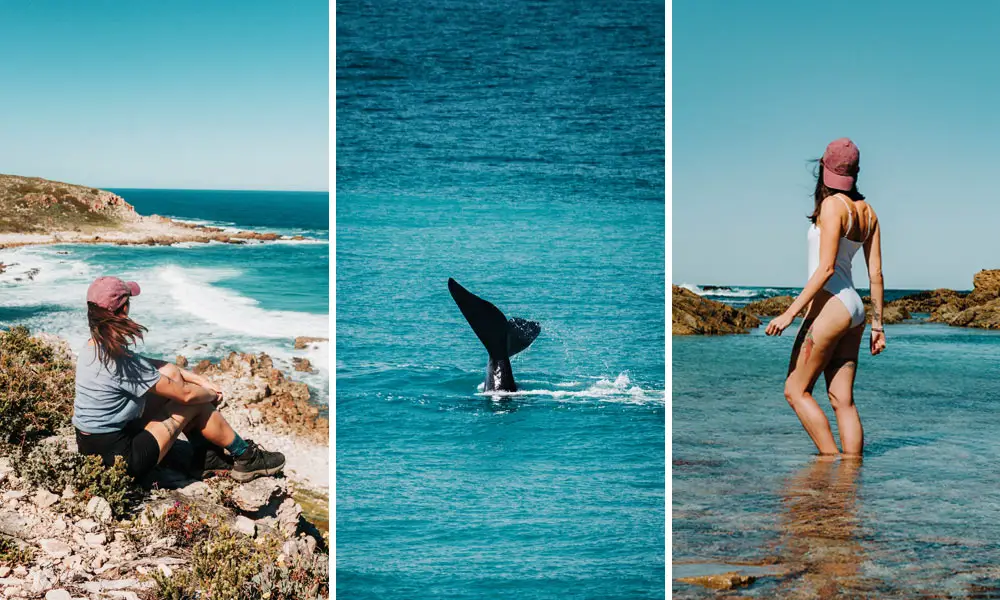
You know those items on your South Africa bucket list that have been there for years?
That’s the Whale Trail hike for me.
Ever since I stumbled across it, I’ve dreamt about hiking it.
When I finally managed to secure permits, the moment felt unreal.
Until I had to make the full payment…That was a painful and grounding moment for myself and my bank account. 😅
…Then there was the 12-month wait.
Yup.
You read the right.
The Whale Trail isn’t a hike you can wake up and decide to do on a whim. Permits go on sale a year in advance and don’t hang around for long.
If you want to conquer the trail, you need to commit to the long haul.
That’s kinda scary when you’re someone like me who can’t even commit to a one-year lease agreement.
…But I digress.
When the 1st of September finally did roll around, I had one of those quintessential “pinch me” moments.
I stood outside of the reservations office, tripping out on a single thought:
“The next time I see this building, I’ll know what it’s like to hike the Whale Trail. It will be in my life experience bank. I’ll have done the thing that’s consumed my mind for so long.”
In the wise words of Bob The Drag Queen:
“That’s wild!”
I’m happy to report that the trail did not let me down. In a single day, I saw 20 whales. It didn’t rain once, and the scenery? *chef kiss*
Worth. Every. Penny.
If you’re on the fence about splurging on the Whale Trail or in full research mode before tackling the trail, welcome. You’ve made it to the right corner of the Internet.
Below, you’ll find a complete breakdown of what to expect, everything I wish I knew, and the answer to the biggest conundrum:
“Is the Whale Trail better than Otter?”
Strap on your hiking boots, grab your K-Way puffer, and let’s go on a hike!
Psst…Want more South Africa hiking tips and inspiration? Check out these other posts:
- Hiking The Otter Trail in South Africa: Absolutely Everything You Need to Know
- The Ultimate Wolfberg Arch Hiking Guide
- The Ultimate Cape of Good Hope Hiking Guide
- 10+ Spectacular Multi-Day Hiking Trails in the Western Cape
- 15+ Best Hikes in South Africa With Mind-Blowing Views
- Crystal Pools Hike: Everything You Need to Know
What is The Whale Trail?
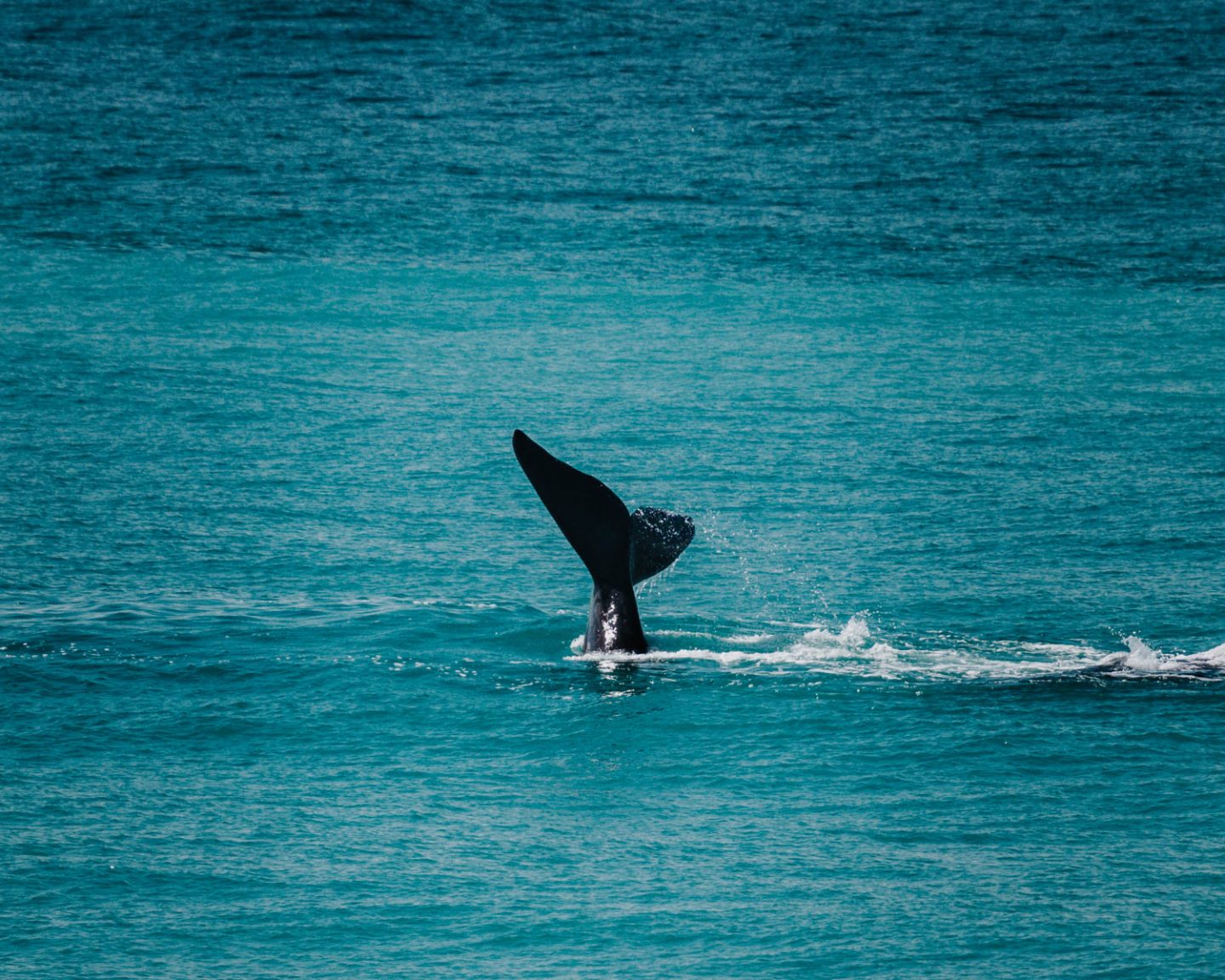
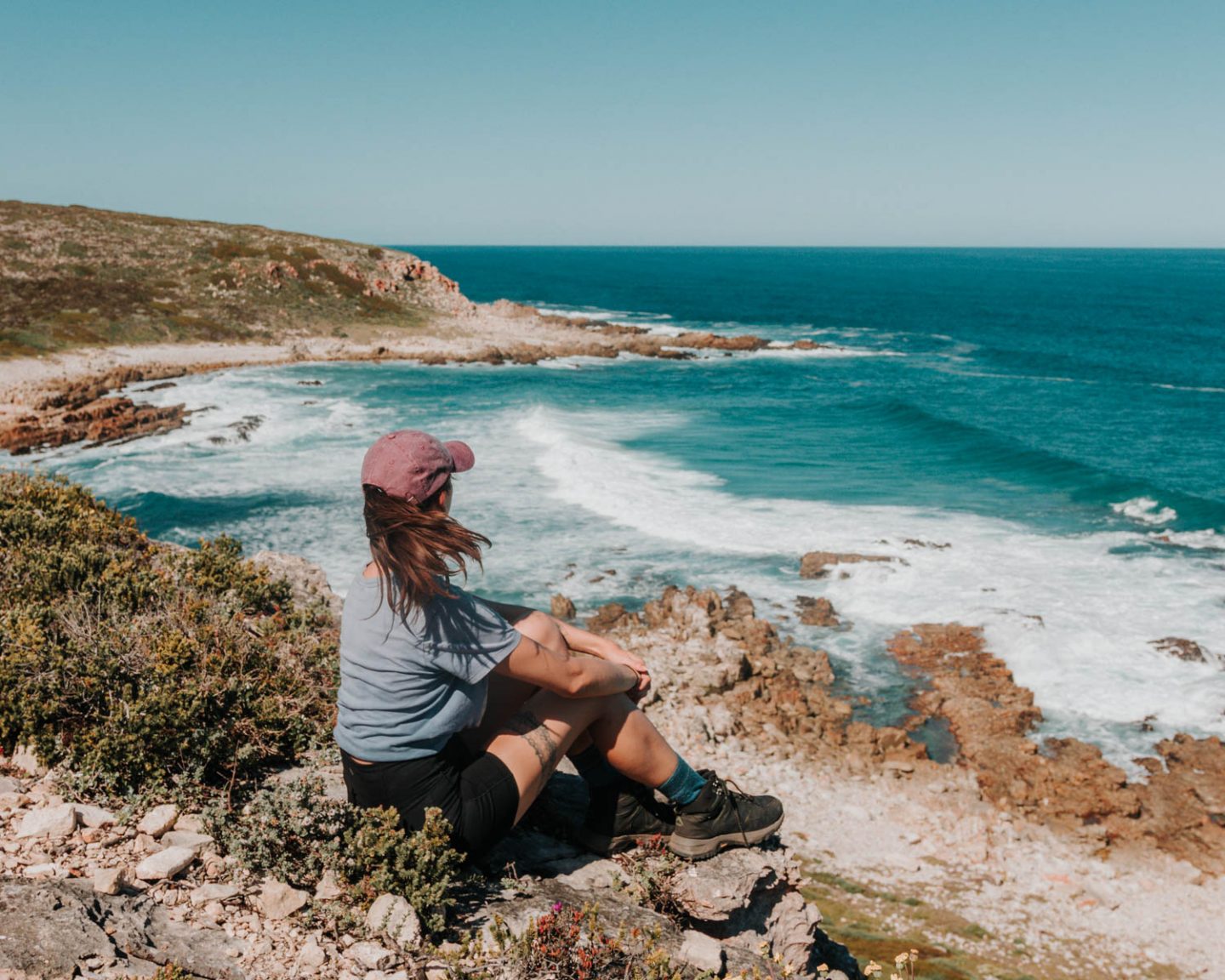
The Whale Trail is an iconic five-day slackpacking hike inside the magnificent De Hoop Nature Reserve in South Africa. Covering a distance of 55km from Potberg to Koppie Alleen, you’ll stay in luxury cabins with all your creature comforts like hot water, showers, and even WiFi nogal.
But what makes this trail special is the annual migration.
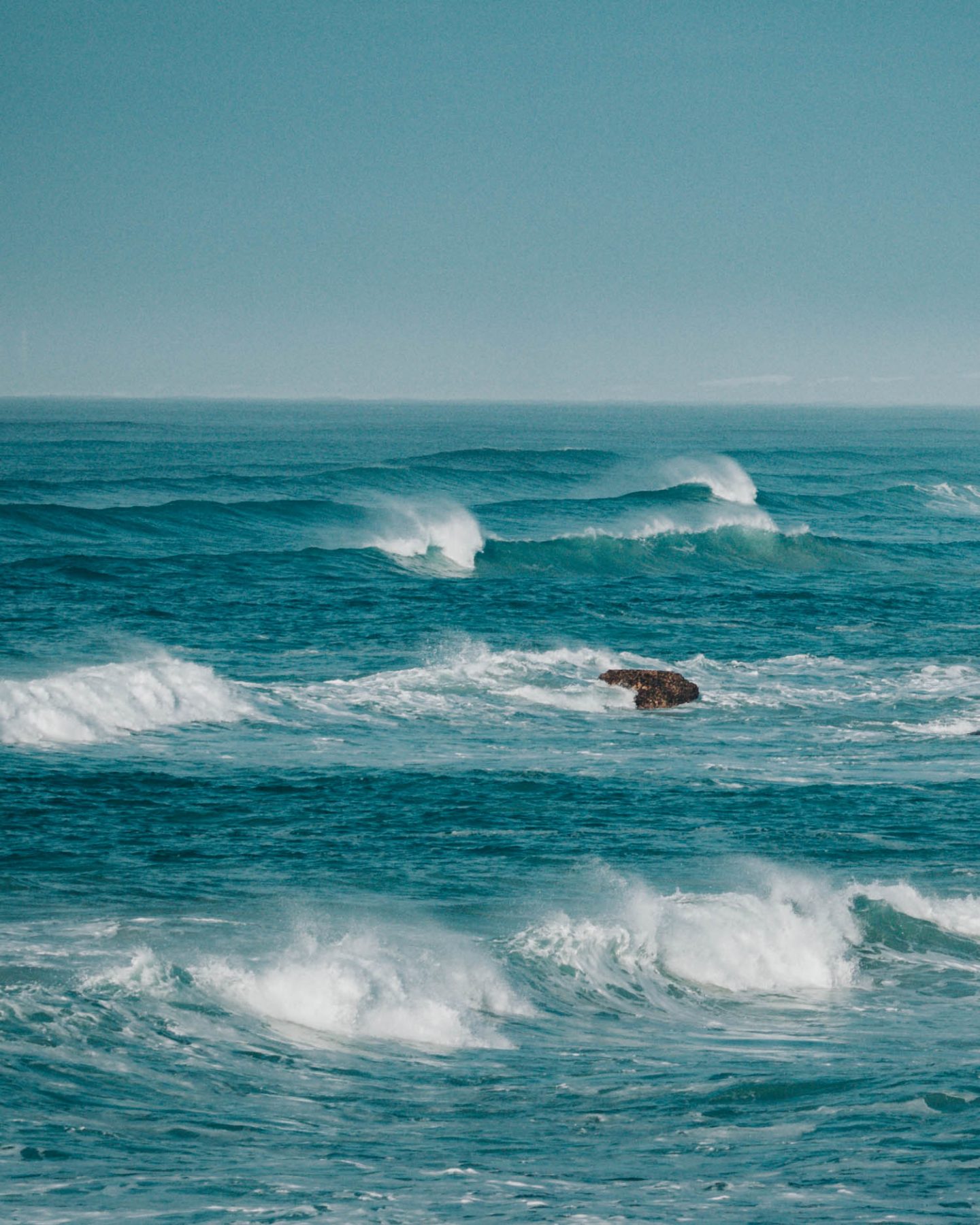
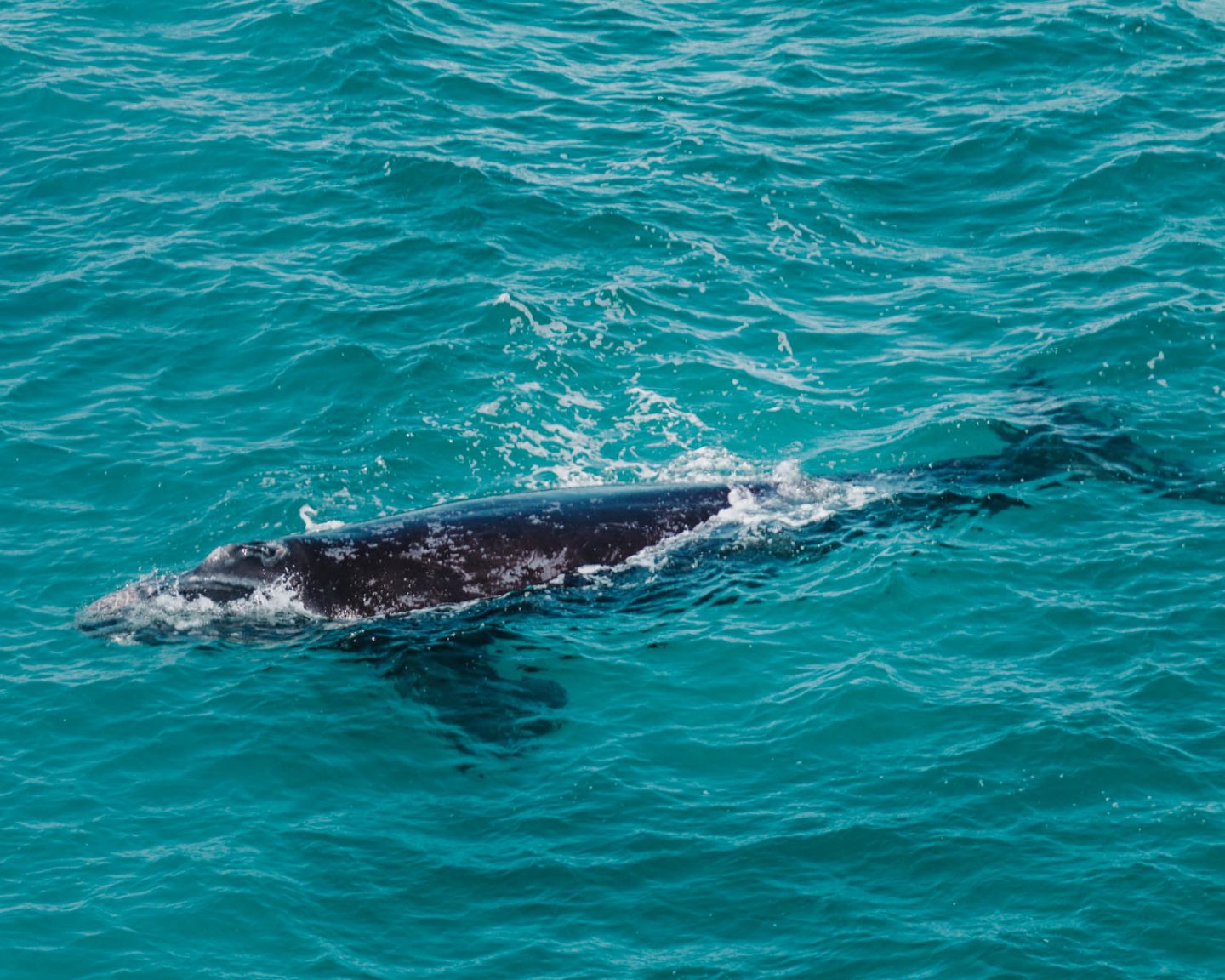
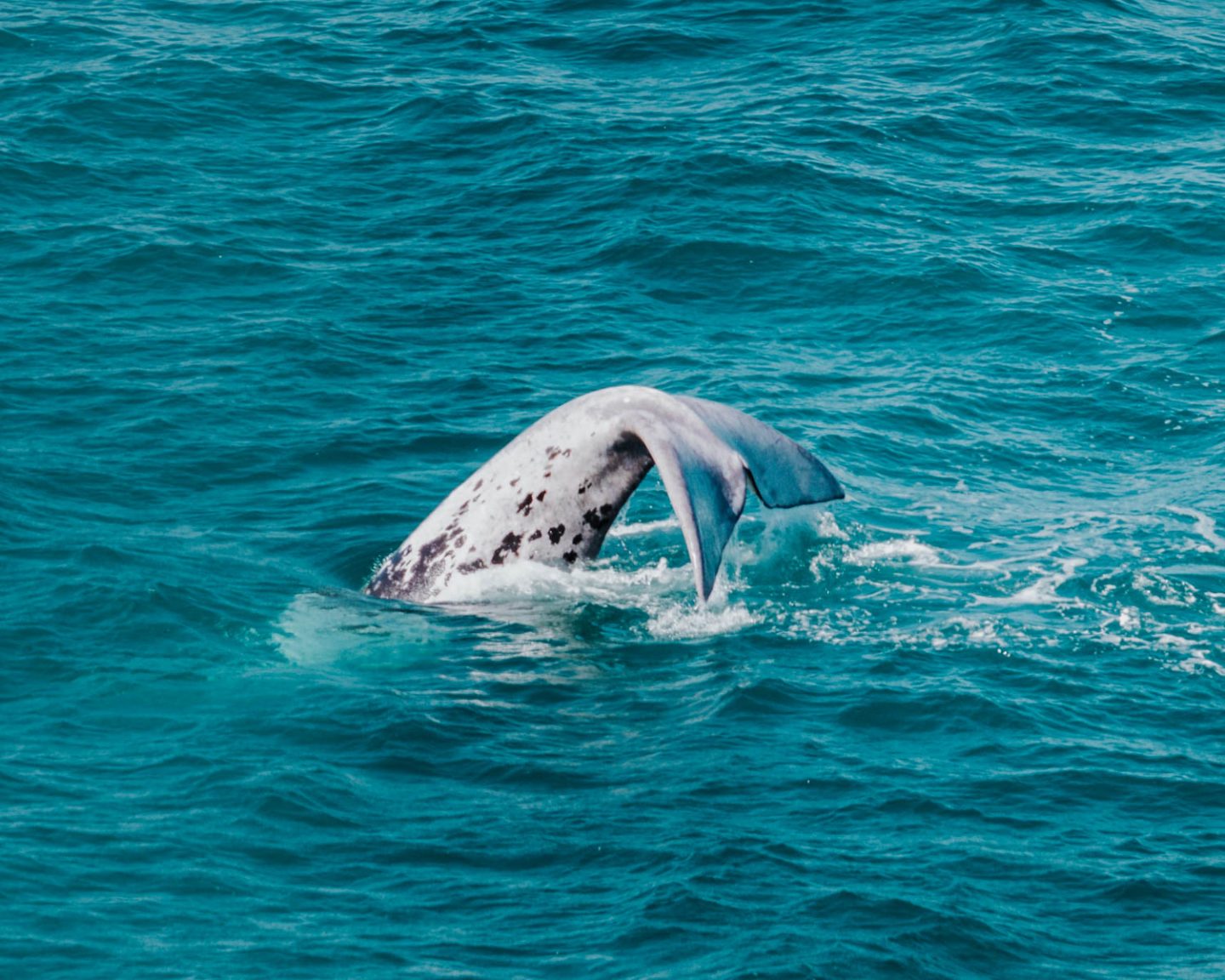
Between June to October, De Hoop becomes one of the best land-based whale-watching spots in the world. As you hike along the coastline, you’ll spot southern right whales and their newborn calves frolicking in the waves.
How incredible?!
When you combine the whales with the fynbos and incredible coastal scenery, it’s a unique multi-day hike in South Africa, whose only rival is the Otter Trail.
Practical Information
Whale Trail Distance: The total distance for the Whale Trail Trail is 55km over 5-days.
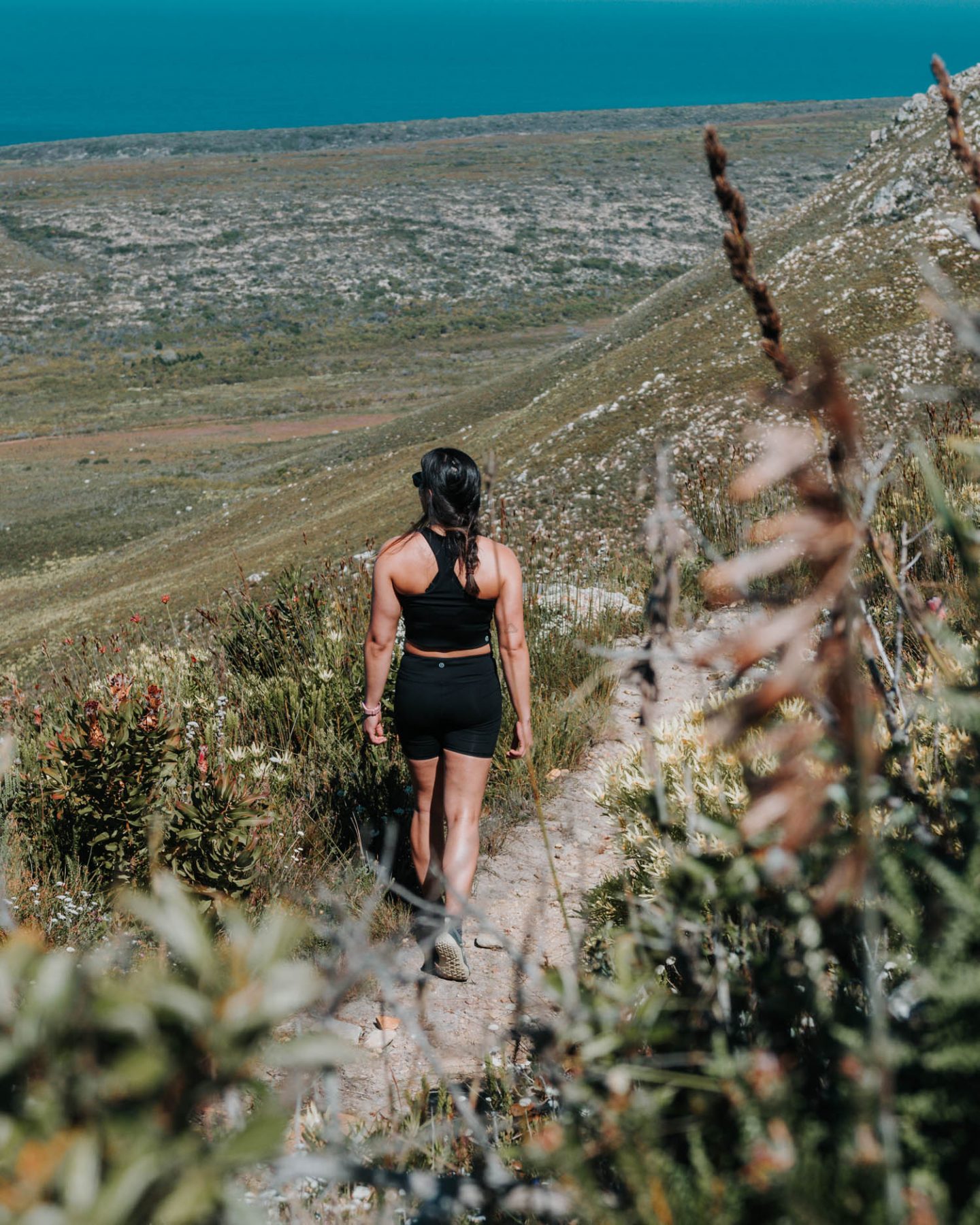
Whale Trail Difficulty Rating: The hardest part kicks off the hike. Day 1 has a steep uphill to get your heart rate up, but it isn’t too challenging. From there, there are gradual inclines and ascents.
Technical Rating: The Whale Trail isn’t a technical hike. Day 1 and Day 2 are slightly more technical/strenuous because of the rocky terrain, but if you’re comfortable with Table Mountain hikes, you won’t struggle.
Age Restrictions: No children below the age of 8 are allowed on the trail.
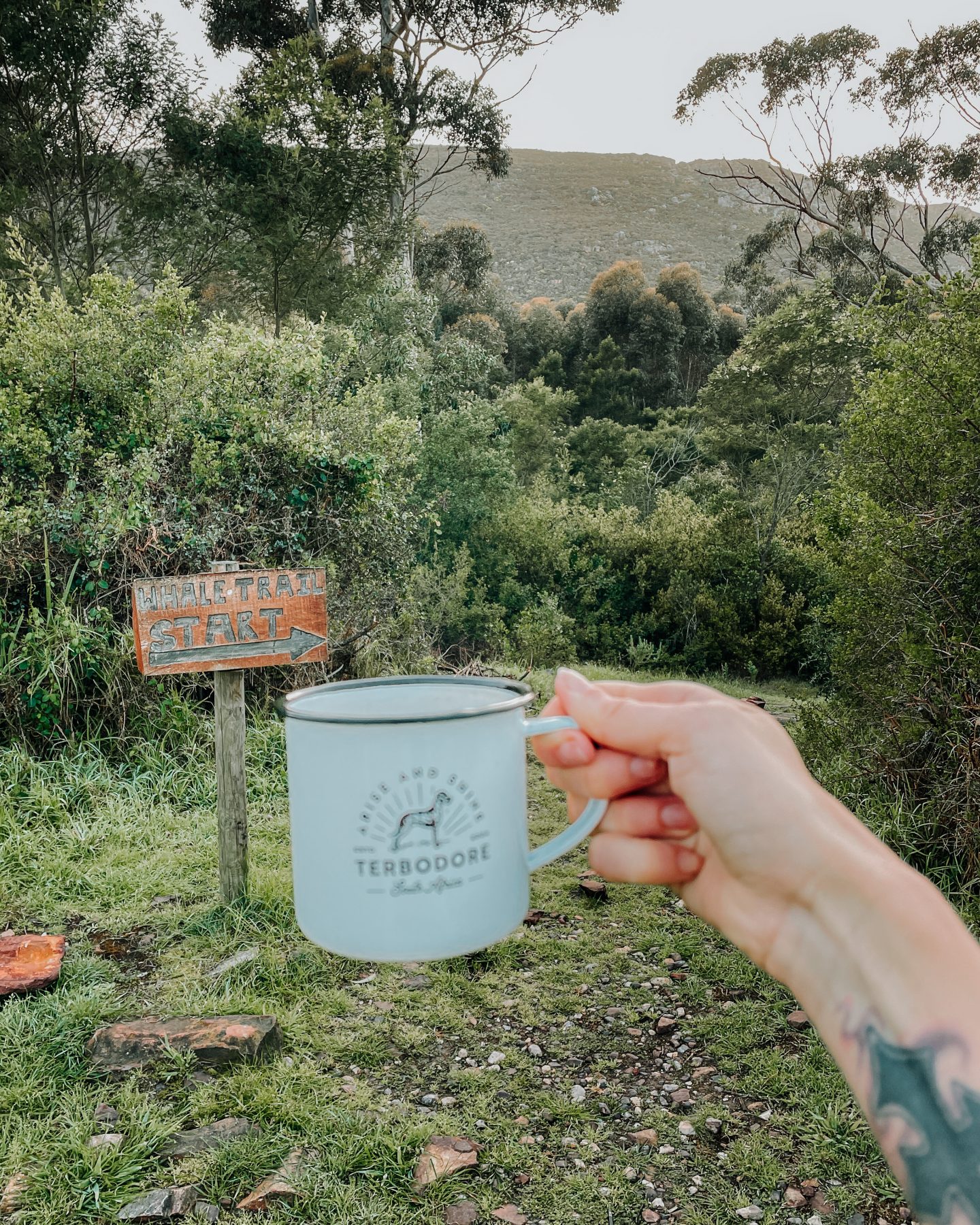
Checking-in For The Hike: The briefing for the hike takes place at reception next to the Potsberg Reserve Office. Your check-in must happen between 14:00 and 15:00 and will only start when all 12 hikers are there. If you miss this window, you’ll need to come back at 7:30 am the next day before you start the hike.
Check Out: After catching the shuttle from Koppie Allen, you’ll head back to reception for a de-briefing. Once that is done, go to the parking area to collect your luggage box, leave tips for the cleaners, and head back home. You should be done with check-out between 13:00 and 14:00.
Medical Aid / Travel Insurance: You never know what might happen on the trail. Make sure you’re covered with comprehensive travel insurance from World Nomads. It’s designed for travellers, and the policy covers a range of activities.
World Nomads provides travel insurance for travelers in over 100 countries. As an affiliate, we receive a fee when you get a quote from World Nomads using this link. We do not represent World Nomads. This is information only and not a recommendation to buy travel insurance.

Whale Trail Bookings
Like Otter Trail, one does not simply decide to hike the Whale Trail on a whim.
As one of the most popular multi-day hikes in the Western Cape and only 12 people are allowed on the trail each day, permits go on sale a year in advance.
What does that mean?
If you want to hike the Whale Trail in September, you need to phone Cape Nature’s reservations hotline on the 1st of September at 9:00 am. When you get through, you can choose from dates for September the following year.
NB: You can only buy permits for a group of 6 or 12.
How Much Does The Whale Trail Cost?

The Whale Trail costs R2,900.00 per person. After receiving your reservation email from Cape Nature, you’ll need to pay the full amount of R17,400 (for 6) or R34,800 (for 12).
Want to turn the hike into a slackpacking experience? You can opt-in for luggage transport.
Portage costs R560.00 per 70l box, and you can pay when you arrive at the Potberg Reserve Office. There are only 12 boxes (one per person) with a maximum weight limit of 30kg each and 2 cooler boxes for storing meat, fresh vegetables, and other perishables.
You can use your 70l for storing your sleeping bag, food, clothes, and anything else you don’t need during the hike.
Whale Trail and permit bookings Tel: 087 087 8250or email reservation.alert@capenature.co.za
NB: You can’t use private containers or have items attached to the outside of the container.
The Best Time to Hike The Whale Trail
The best time to hike the Whale Trail is during whale season.
Duh.
From June to October, the annual southern right whale migration begins, and you can see dozens of mothers and calves just behind the wave break.
But which month is the absolute best?
September.
And yes, that answer is full of bias, but hear me out.
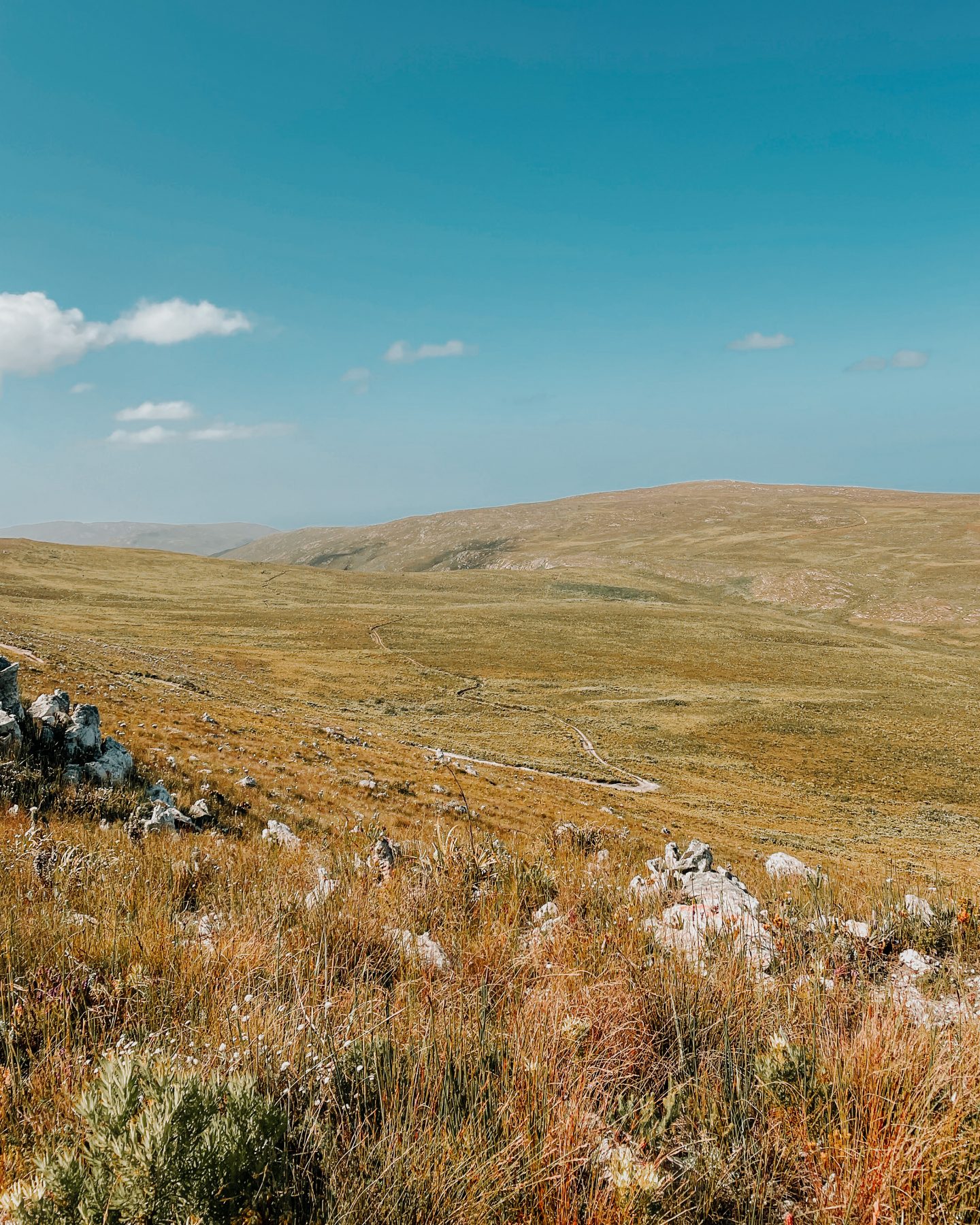
There is not much shade over the 55km, so once you leave your cabin, the sun beats down on you until you reach your next destination.
It’s why the staff will recommend you start your hike as early as possible.
…But what if you’re a late riser or want to take things slow?
September is the answer to your woes.
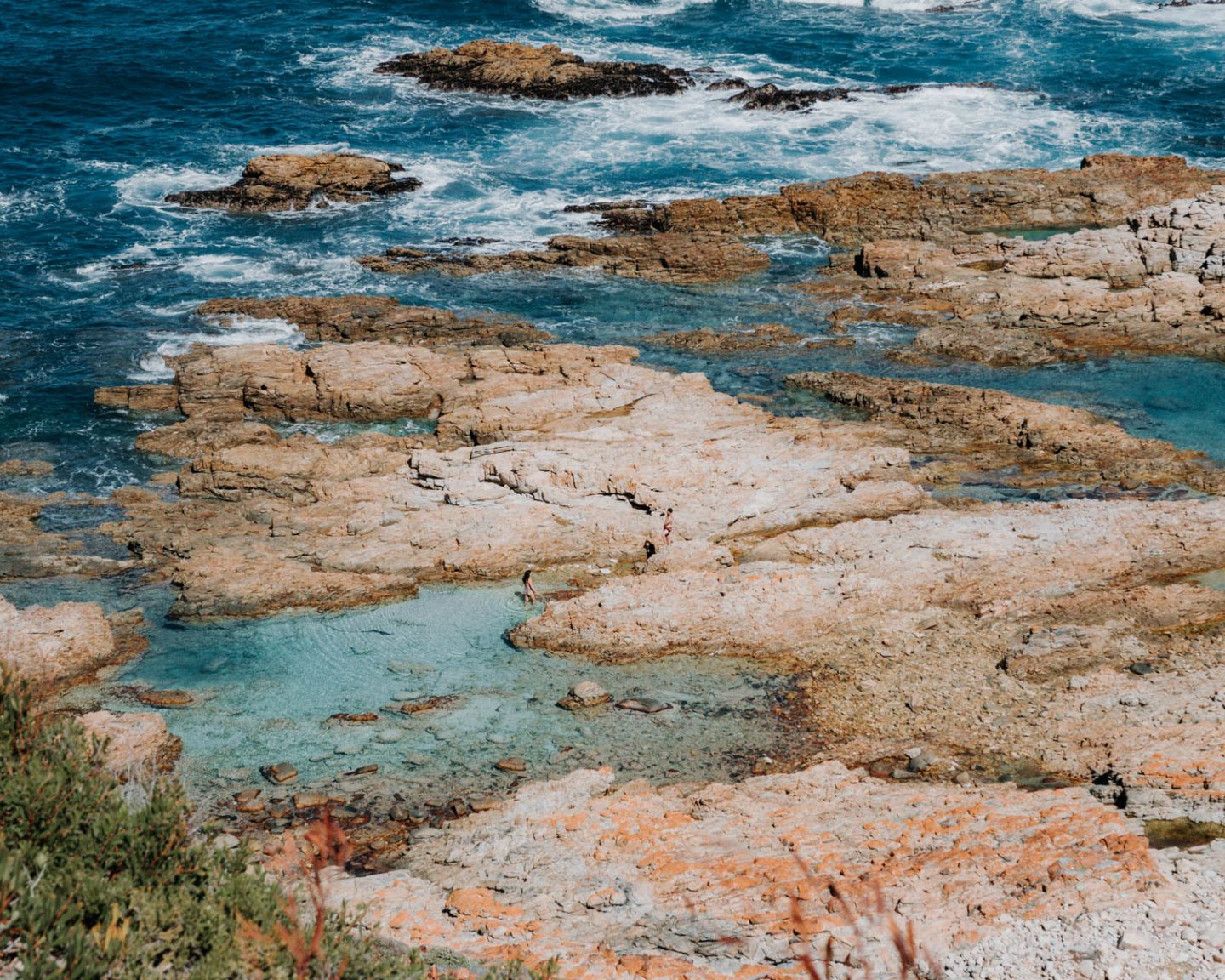
Hot on the heels of the winter months means you’ll have perfect hiking weather. The sun isn’t too hot, and it’s warm enough to take a dip in one of the tidal pools.
(Well, maybe only if you’re a Cape Townian.)
While rain is possible, you should still have good weather for evenings around the braai area and stargazing.
Besides that, the whales are around.
September is smack bang in the middle of South Africa’s whale season, and trust me. You won’t need to look hard to spot these magnificent beasts.
If you can’t snag permits for the migration, no worries. You can still hike the trail year around, and out of season comes with a few advantages:
- Your permits are cheaper
- You’ll have warmer weather for swimming in the rock pools and snorkelling

How to Get to De Hoop Nature Reserve
The quickest way to get to De Hoop Nature Reserve is to fly into Cape Town International Airport or George Airport in the Garden Route.
From the Mother City, it’s a scenic 3-hour drive that’ll take you past one of my favourite places in the Western Cape, Elgin. While you’re here, don’t forget to stop for a coffee and a pie at the delectable Peregrin Farmstall.
From George Airport, it’s a 2h 50-minute drive along the N2. If you have time for a pit stop, take a break at Swellendam. There’s a fairy sanctuary, dozens of cute cafes and restaurants, and a boutique wine route.
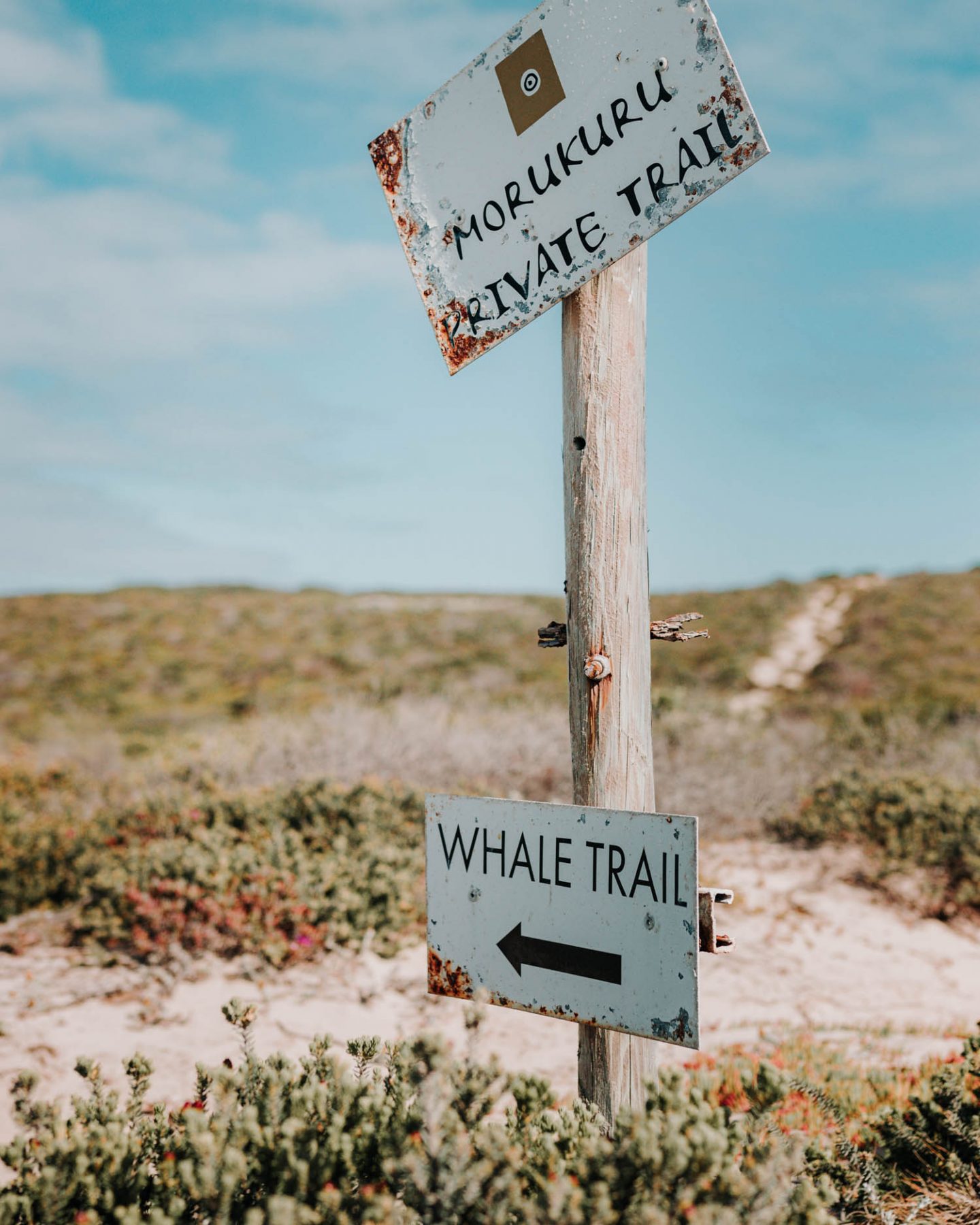
Tip: When you turn onto the dirt road to get to the check-in point for the hike, keep straight and follow the Whale Trail signs towards the Potberg Reserve Office. Do not turn off to the De Hoop Reserve Collection.
Here are the GPS Coordinates for the Potberg Reserve Office: 34°22’29.15″S 20°31’59.75″E
Read More: An Epic One Week Garden Route Itinerary (Detailed)
What to Pack for The Whale Trail
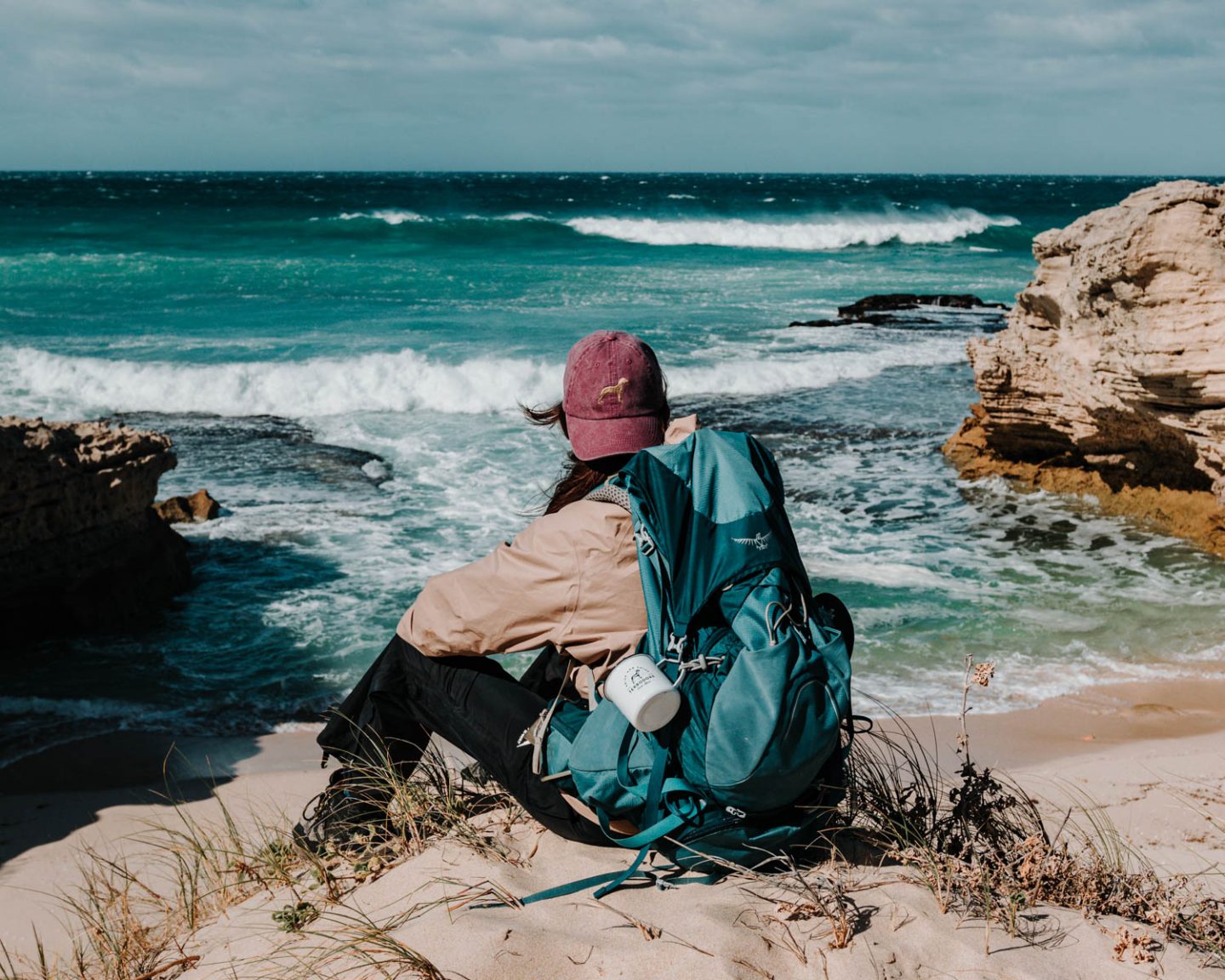
Water Bladder: You need to have a minimum water capacity of 2l every day on the hike. Once you leave the cabin, there are no water points, and a water bladder is the easiest option for staying hydrated. It slips into the back of your day pack, and the nozzle is within easy reach. It does a fantastic job of keeping you hydrated and saving you from having to take your pack off to reach your water bottle. I use the 2l First Ascent Water Bottle.
Day Pack: If you opt for luggage transport, you only need a small day pack to hold your water, snacks, and camera. I would recommend the Flint 25L Backpack or the K-Way Pacer 28L Day Pack.
Rain Gear: Come prepared if the weather gods decide to rain on your parade. Make sure you always have an ultralight rain jacket, a waterproof cover for your backpack, and a dry bag for your valuables. Another “nice to have” I splurged on recently is a pair of rainproof trousers, which came in handy on Day 4 of the Whale Trail. We didn’t have rain, but strong winds and a long walk on the beach. These pants saved my legs from the sand lashing and kept me cool.
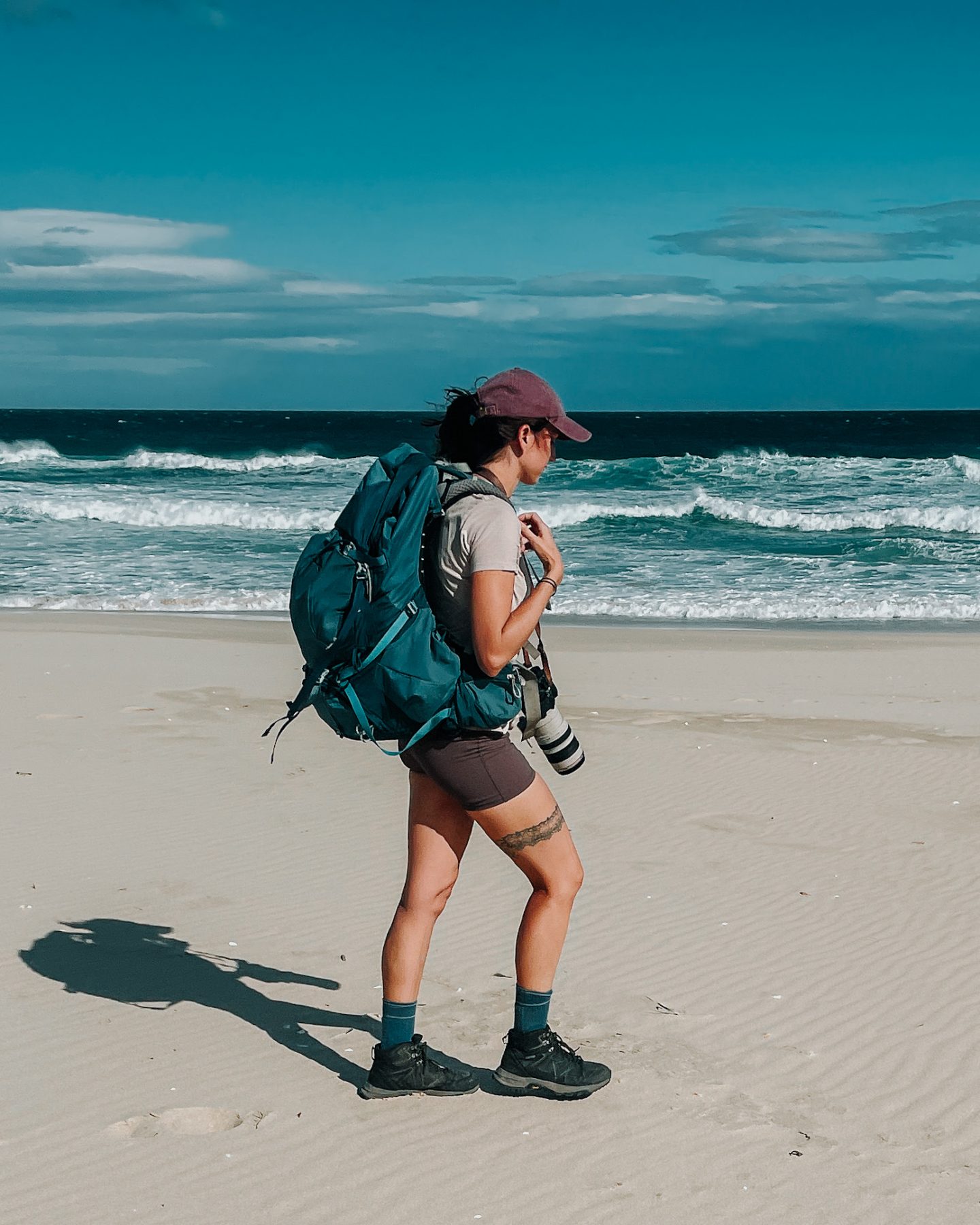
Hiking Boots: I wore my K-Way Men’s Edge 3 Waterproof Mid Hiking Boot. For a multi-day hike, I recommend a boot over a shoe. Why? To give your foot ankle support while walking on uneven terrain. I’ve been wearing this pair from K-Way for the past year, and it quickly replaced my Hi-Tec Altitude V Ultra hiking boots as my go-to. This pair is actually from the men’s range (because I have giant feet and don’t vibe with the women’s colours), and I cannot sing its praises enough.
Hiking Socks: As a rule of thumb, I wear two pairs of hiking socks to prevent blisters. The inner sock reduces friction and helps you wick away moisture from your foot. Opt for mohair socks if you’re in the market for a new pair. These have incredible moisture-wicking properties and are super soft, helping to reduce the friction that causes blisters.
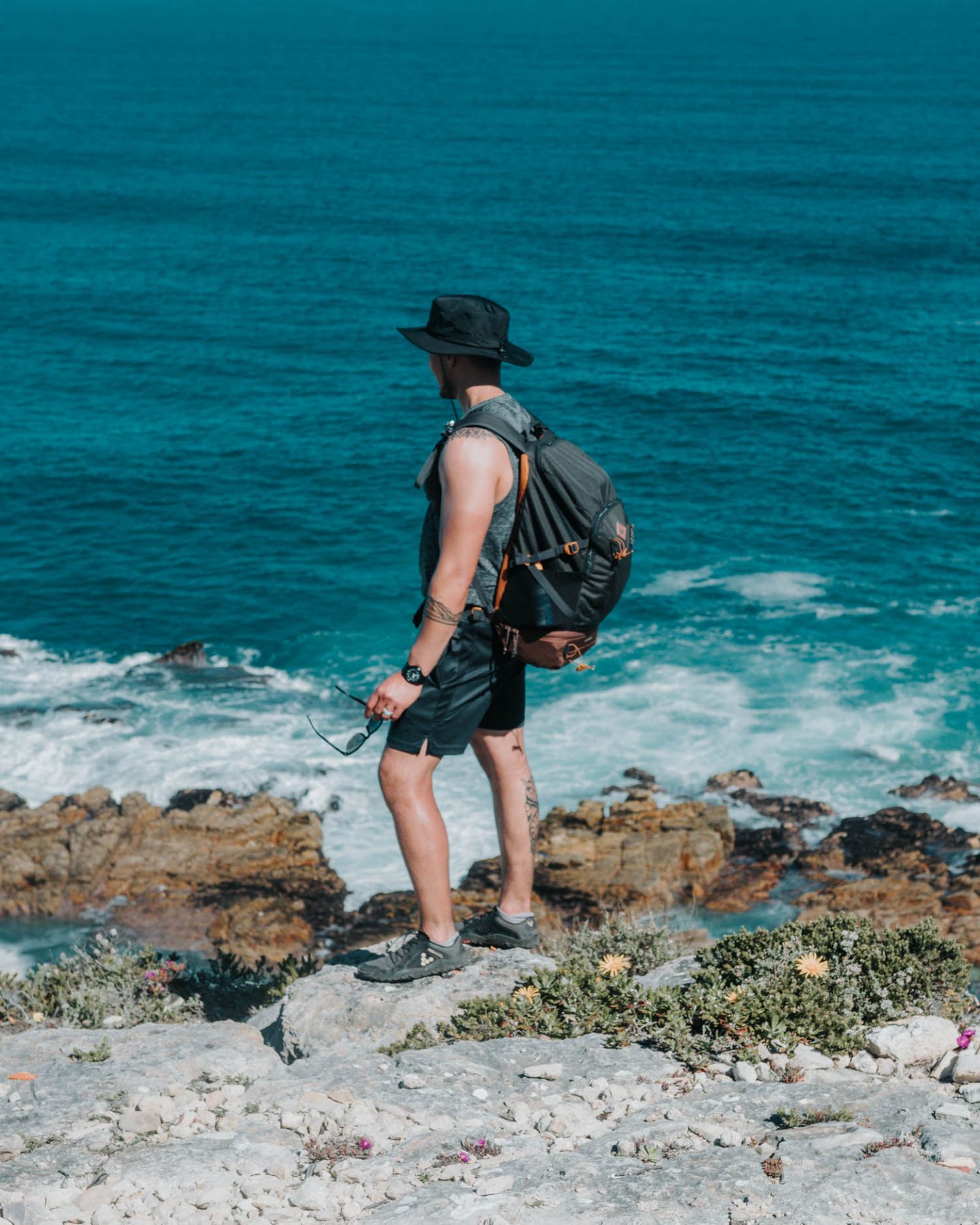
Sun Protection: Never ever start a hike without sun protection. It helps protect you from heat stroke and painful sunburn. Pack a pair of UV sunglasses, SPF 50+ sunscreen and a hat.
Camera: The Whale Trail is one of those hikes where it’s worth bringing a decent camera. If you can, rent a zoom lens with a focal lens of at least 200-400m to capture photos of the whales playing in the waves. I used my Canon 80D, Sigma Art 1.8f 18.35m, and Canon 4.5f 200-400m, as well as my iPhone 12 Pro.
Chargers: All the huts have electricity, so you don’t need to pack extra batteries. Don’t forget your camera and cellphone chargers.
Battery Pack: Even though there is electricity, you might run low on battery power if you’re using your phone to record video and take images.
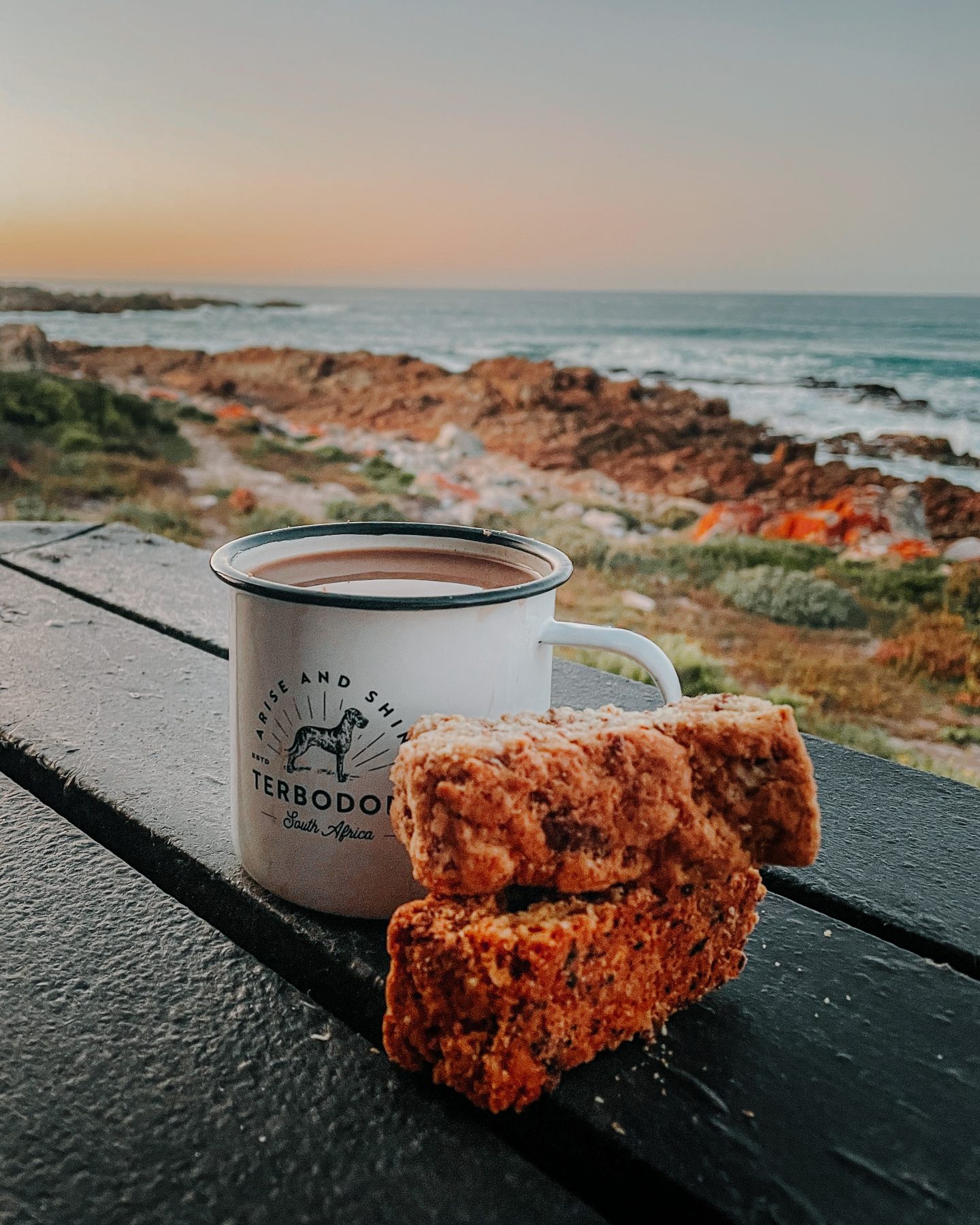
Food: You’ll need to pack enough food for five breakfasts, four dinners, and snacks for lunch. Throw in a couple of bottles of wine, beer, or gin and if you’re a coffee snob, take along your plunger.
Sleeping Bag & Pillow: I took my First Ascent Amplify Down 900, which was waaaay too warm for September. A summer sleeping bag is better if you’re going around the same time as me.
Ear Plugs: You’ll share a room with three to four other people at each cabin. Unfortunately, someone is going to snore. If you’re a light sleeper, pack a pair to help get a decent night’s sleep and help your body recover from 6-hours of hiking.
First Aid Kit & Medication: Something you should always have on your hiking packing list is a first aid kit. You can pick up travel-sized ones from most pharmacies that have all the essentials. That said, stock up on a few other meds as well. I took hayfever pills (as it was wildflower season), Advil (a gift from the gods), panado and deep heat (a must-have).
Clothes: You’ll need a new set of clothes for each day on the trail. Besides the obvious shorts, leggings, t-shirts, and pyjamas, bring an insulating fleece, a down jacket, and a pair of tracksuit pants.
Flip Flops or Sandals: After a long day of walking, the last place your feet will want to be is inside your hiking boots. Bring a pair of flip-flops or sandals like Birkenstocks which you can wear with socks.
Firelighters: If you’re planning to braai, pack a box of firelighters and matches.
Insect and Tick Repellant Spray: If you’re hiking Whale Trail during tick season, do yourself a favour and buy HHL Vital Protection AM2 Repellant Spray. Spray it on your clothes, and it will repel a host of biting insects like ticks and mosquitos.
Read More: 45+ Hiking Essentials: The Ultimate Hiking Packing List for Beginners
Meal Planning For The hike
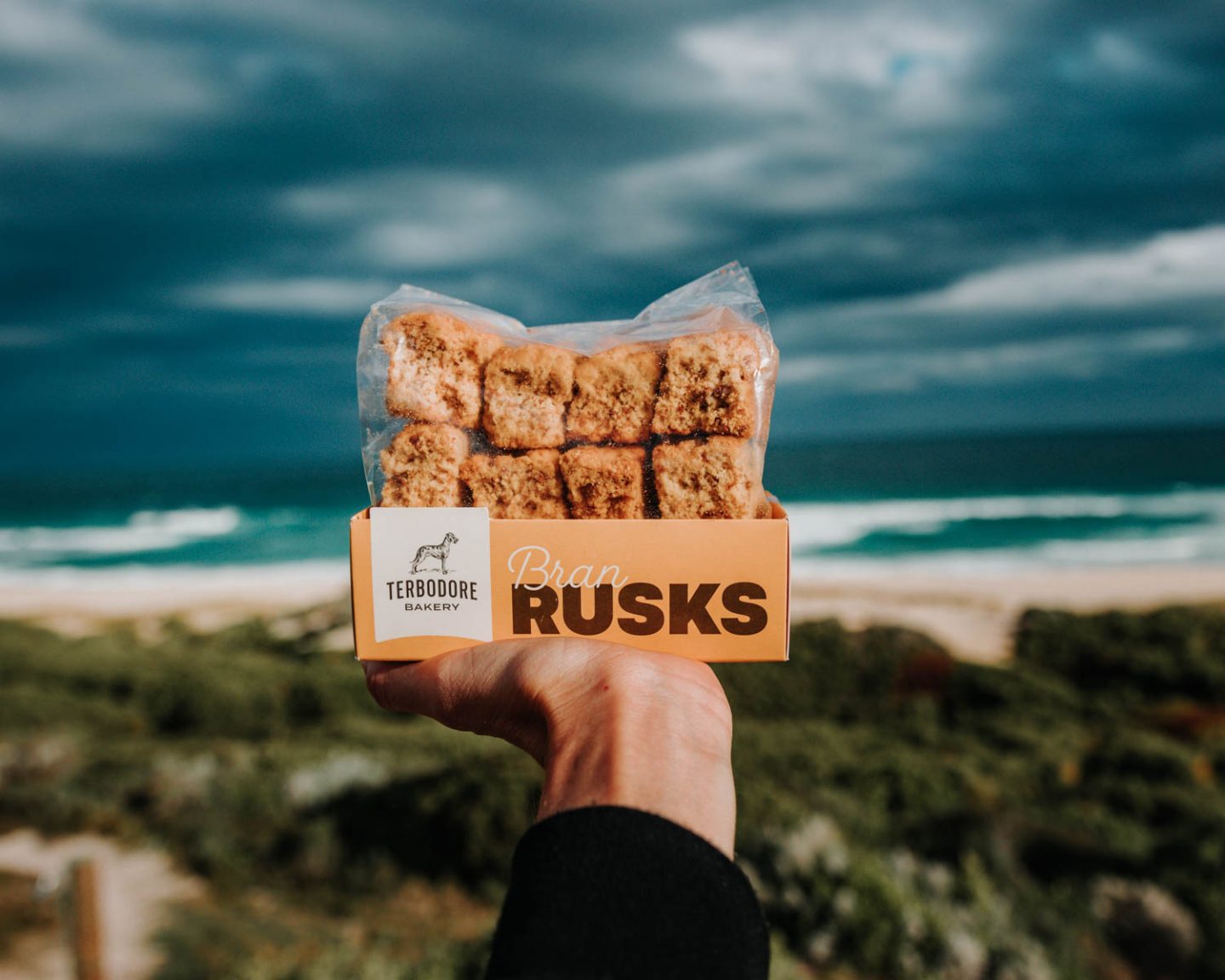
Your meal plan should include carbohydrates, protein, salt, and sugar when packing food for the hike.
• Protein to help your body repair muscles and recover.
• Carbohydrates for energy, improving endurance and delaying fatigue.
• Sugar for a much-needed energy boost.
• Salt to replace what you sweat out.
Need some food inspiration for your hike? Here are the meals I prepped for each day:
Potberg Hut: Breakfast & Dinner
- Oats with fruit and nut butter
- Vegetarian and meat patties on the braai
- Salad (baby spinach, strawberries, feta, olives, red onion)
- Grilled mielies
- Potato salad
- Chocolate pudding
- A bottle of wine
Cupidoskraal Hut: Breakfast & Dinner
- Oats with fruit and nut butter
- Lamp chops and vegetarian schnitzels
- Salad (baby spinach, cherry tomatoes, feta, olives, and avocado)
- Potato salad
- Milk tart
- A bottle of wine
Noetsie: Breakfast & Dinner
- Oats with fruit and nut butter
- Vegetarian and beef nachos with salsa and guacamole
- Chocolate mousse
- A bottle of wine
Hamerkop: Breakfast & Dinner
- Oats with fruit and nut butter
- Vegetarian pasta (pesto, chickpeas, green beans, olives, and cherry tomatoes)
- Salad (baby spinach, red onion, feta, and avocado)
- Lemon cheesecake
- A bottle of wine
Vaalkrans: Breakfast & Dinner
- Oats with fruit and nut butter
- Vegetarian curry with couscous
- Lemon dill potato salad
- Chocolate pudding
- A bottle of wine

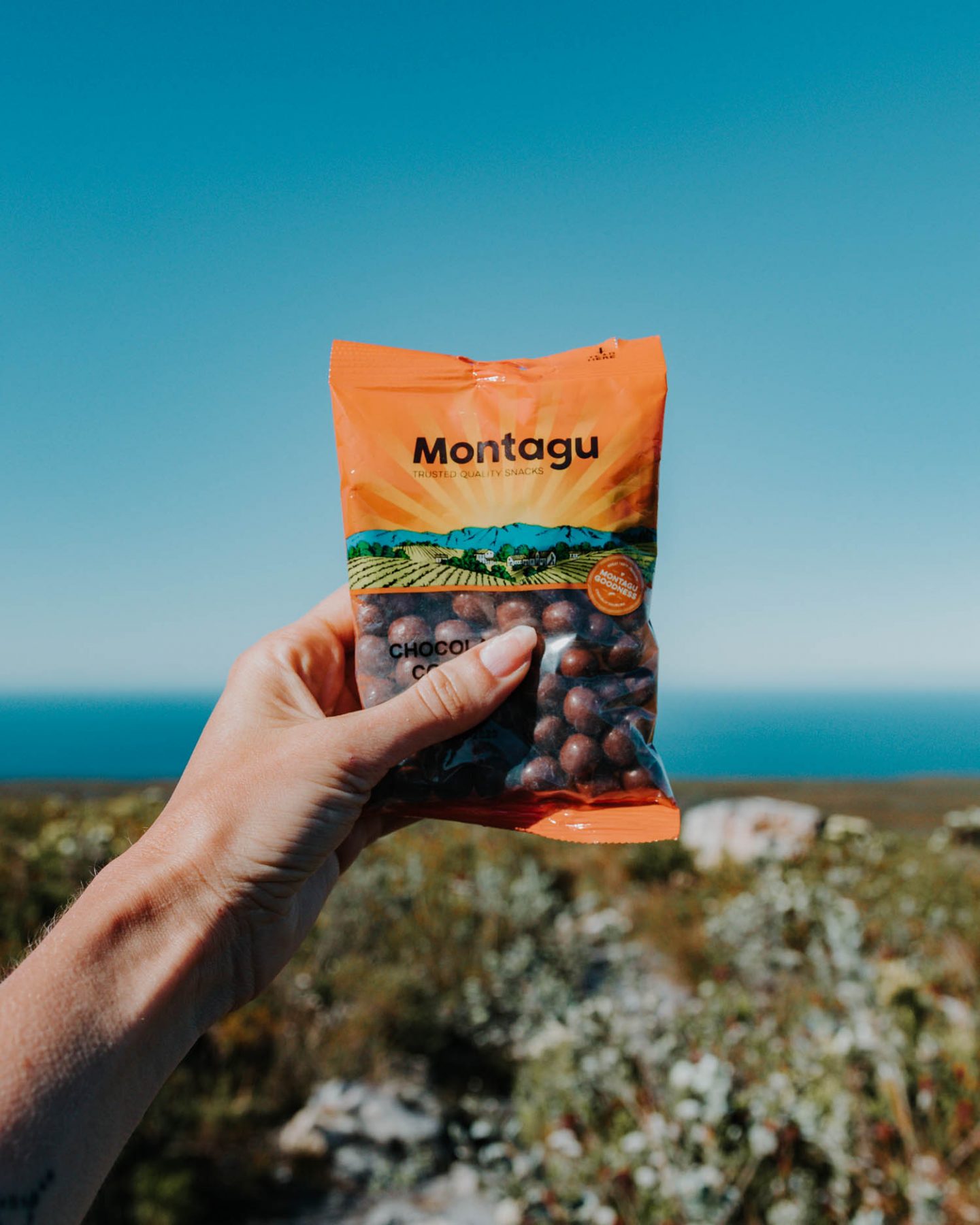
For snacks, Montagu gave us a bunch of delicious treats to try on the trail. Here are some of my favourites:
- Sriracha Peanuts
- Dark Chocolate Almonds
- Dark Chocolate Peanuts
- Salted Macadamias
- Caramel Coated Popcorn
- Creme Brule Mango Bites
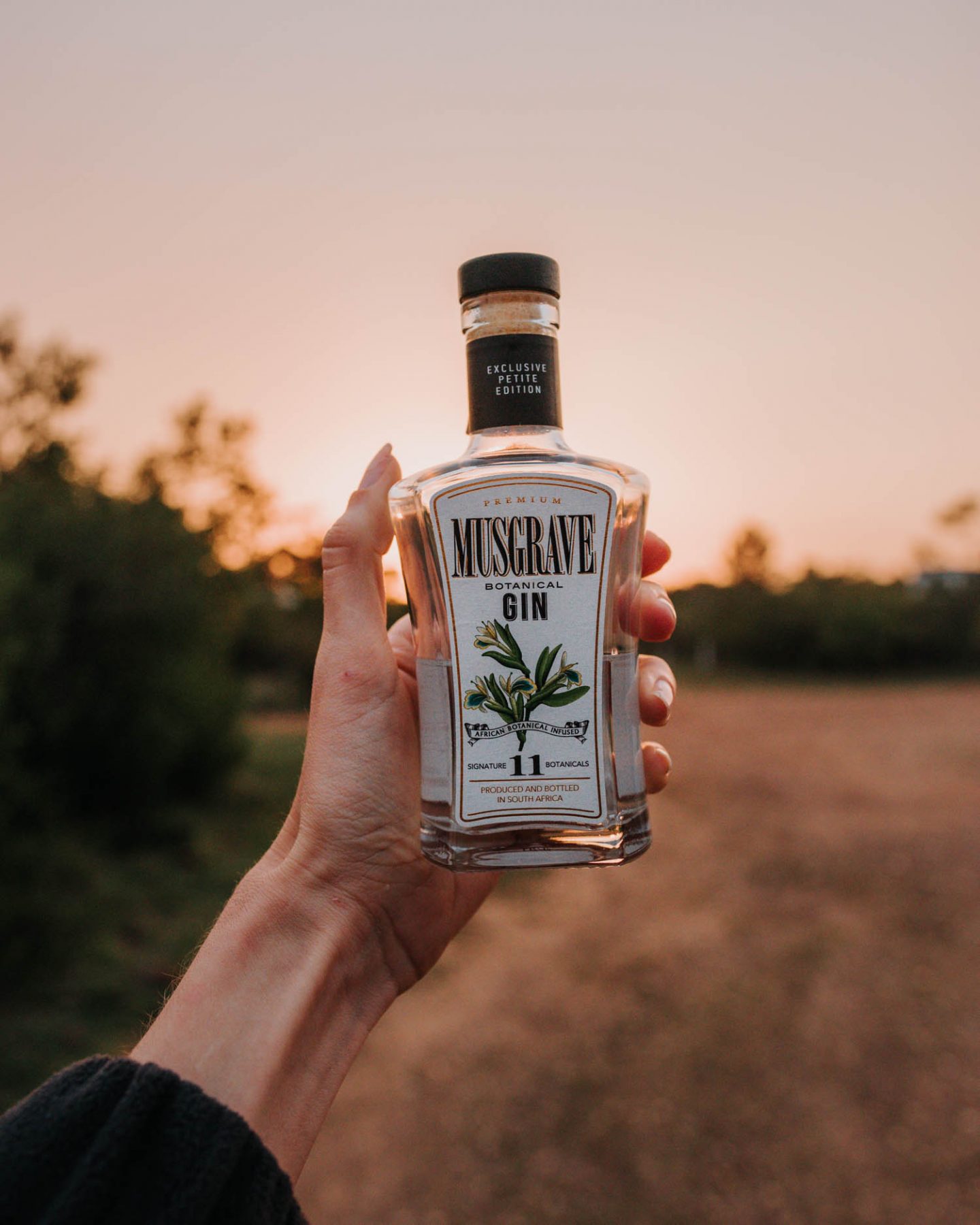
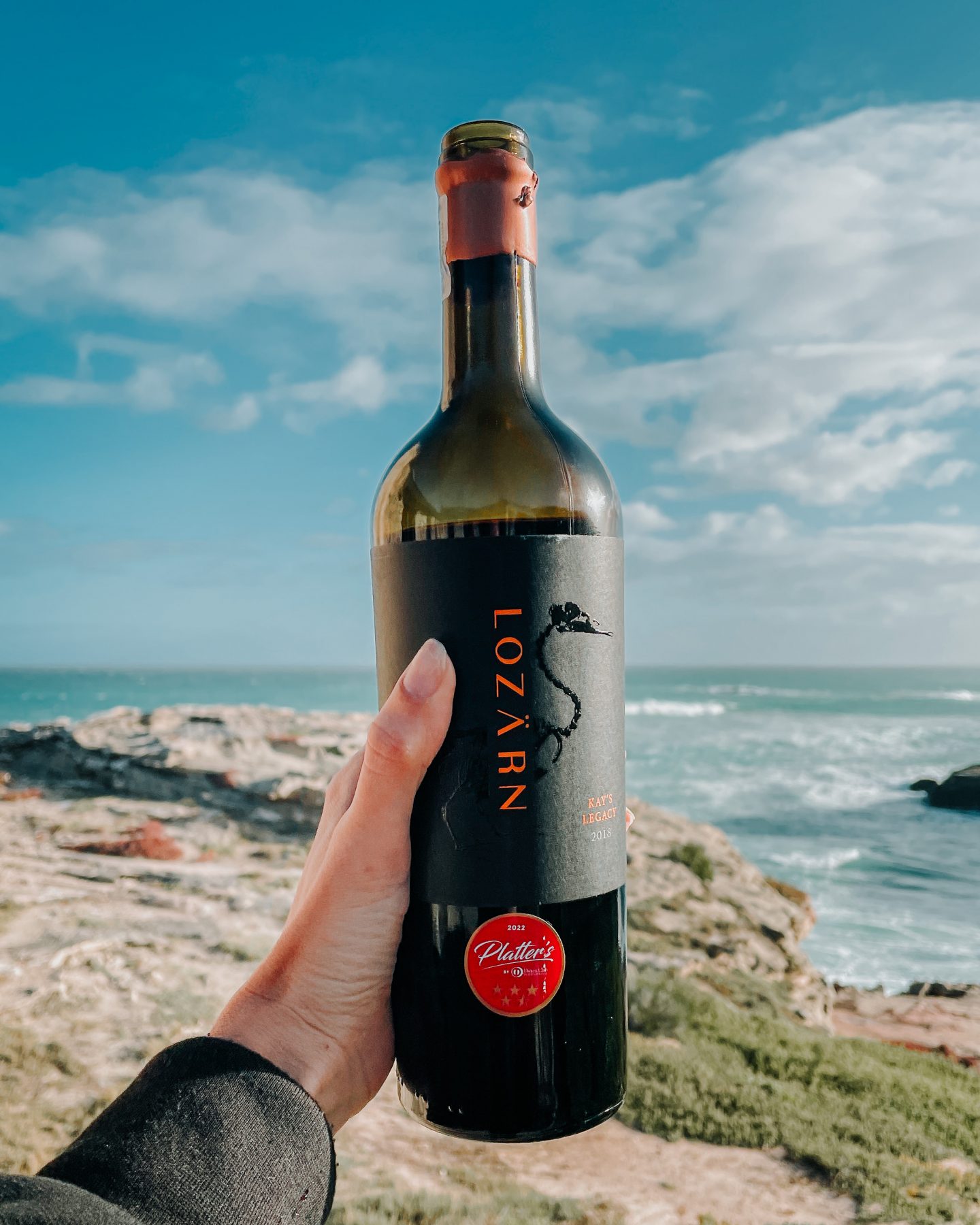
For drinks, we had six bottles of wine from Lozarn and Durbanville Hills as well as gin and brandy from Musgrave Spirits.
Whale Trail Accommodation
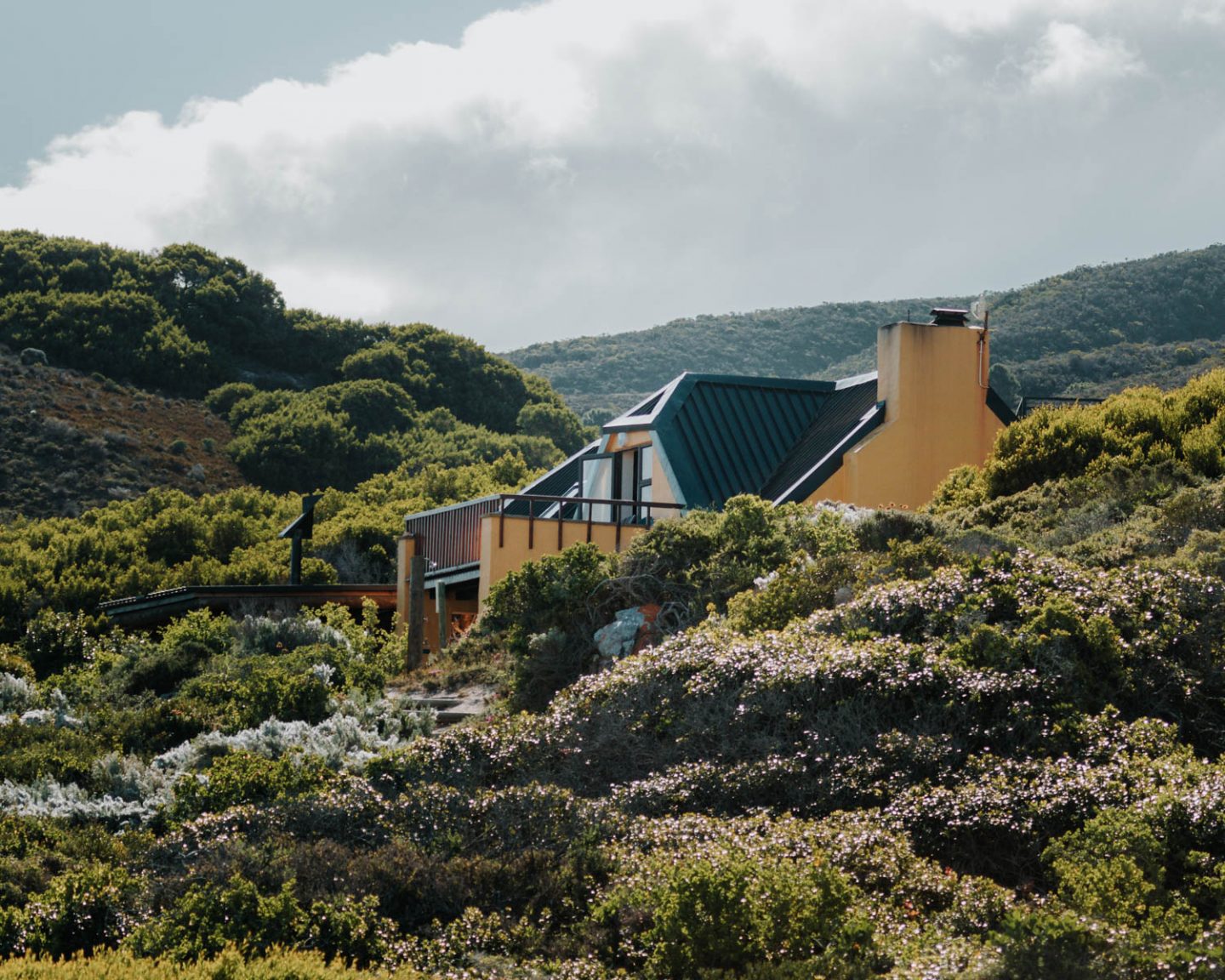
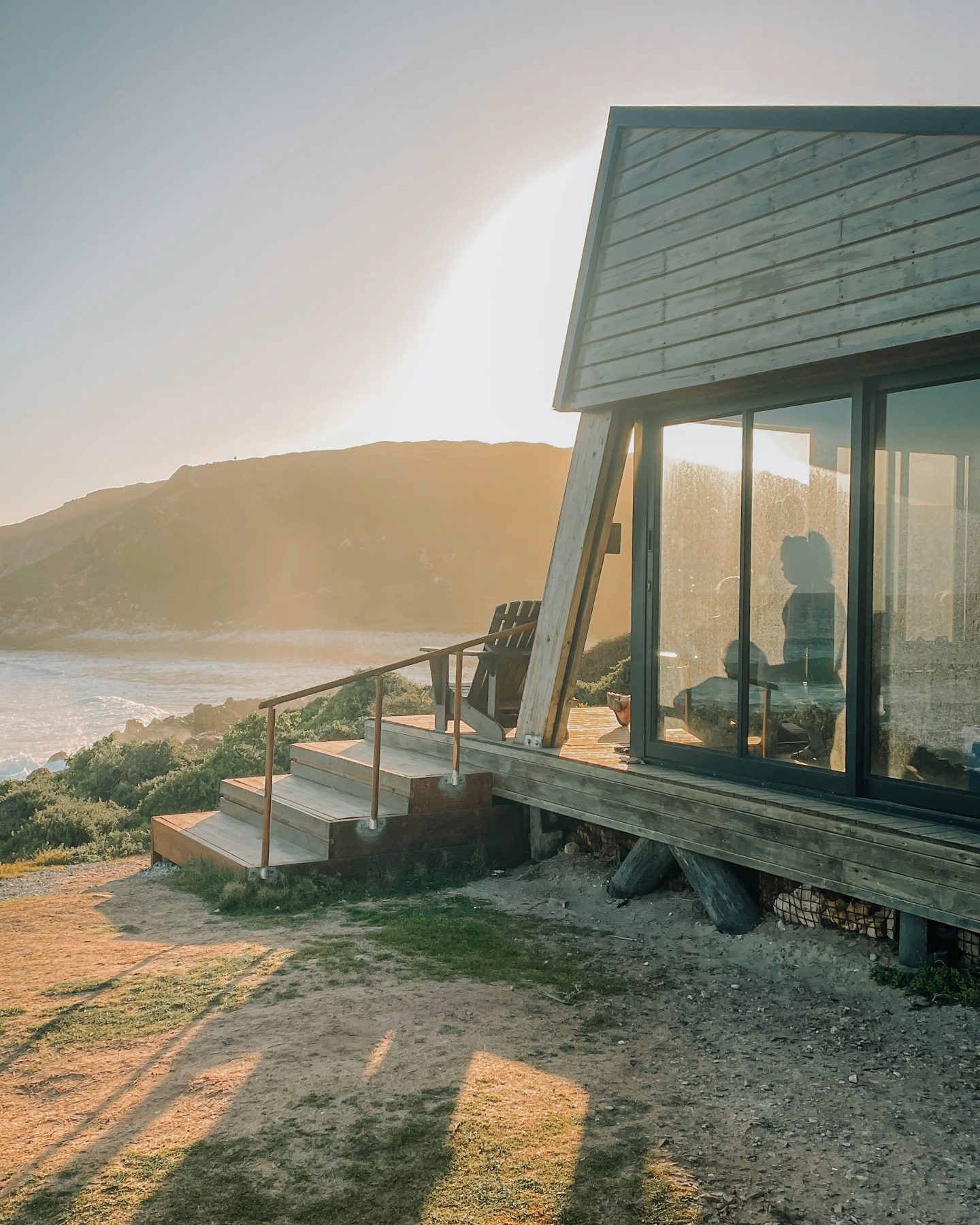
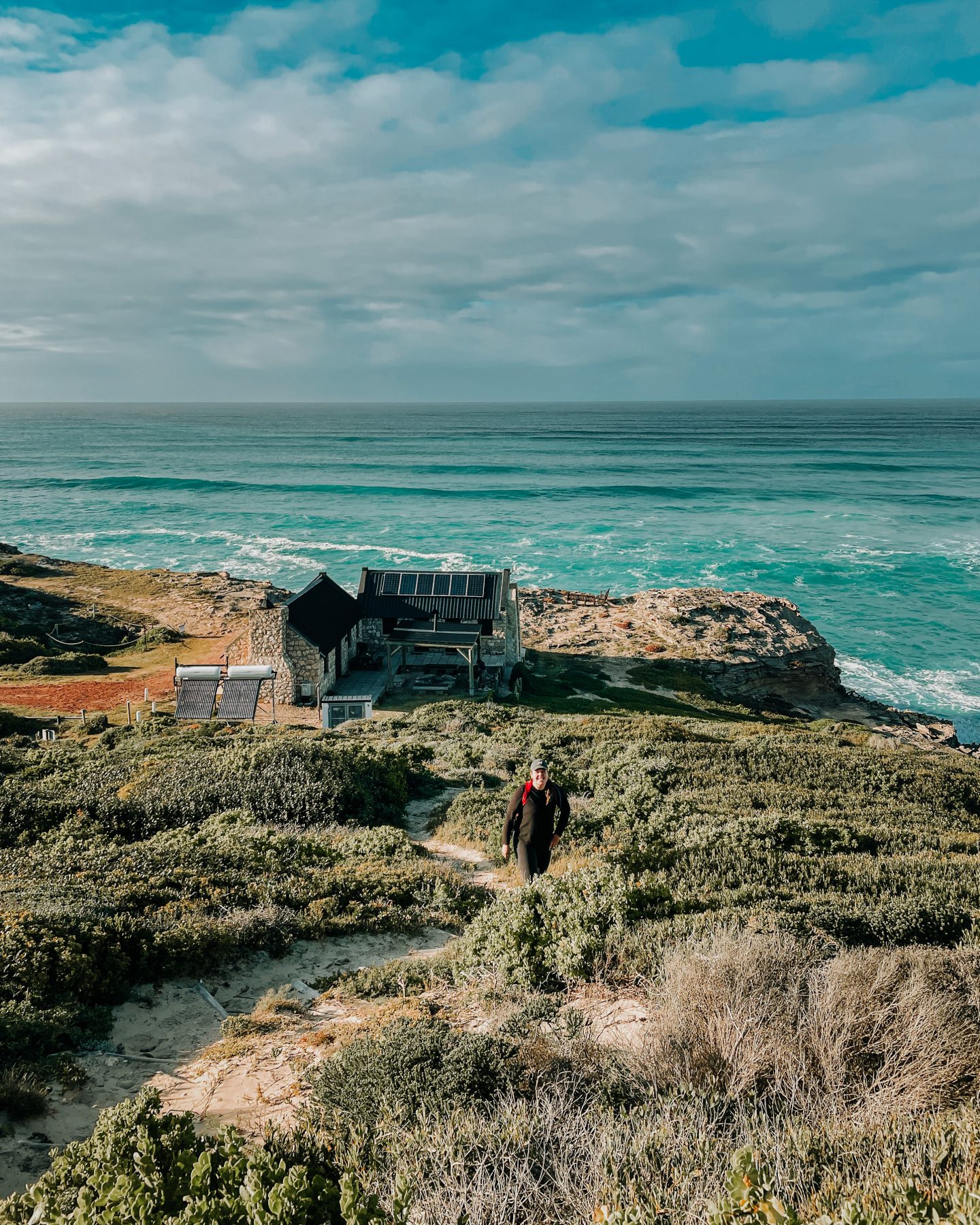
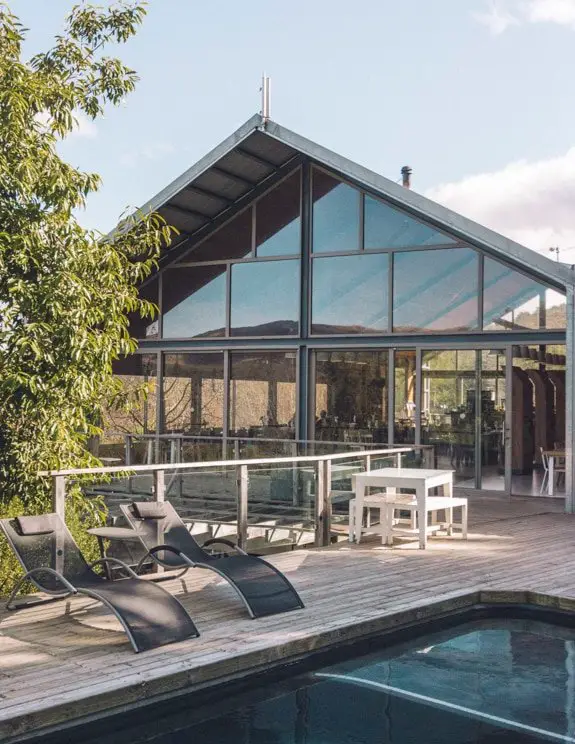
The Whale Trail is all about putting the luxury into multi-day hikes. Instead of simple wood cabins with ice-cold showers, you can expect to stay in a range of stunning cottages with (almost) every creature comfort.
The five Aniston-style houses and A-framed thatched cottages are located at the foot of the Potberg mountains, along the coastline and high on a sea cliff.
Inside each cottage, you can expect:
- 3 bedrooms with 4 beds in each room
- Fully equipped kitchen with braai tongs, a gas stove and a fridge
- Electricity
- Hot showers with gas geysers
- WiFi (when it’s working)
- Firewood
- Indoor and outdoor braai facilities
- Toilet paper, matches, and dishwashing liquid
What to Expect on the Trail
Day 0: Check-in at Potberg
The first day of the Whale Trail isn’t a hiking day. You must arrive the day before between 14:00 – 15:00 to complete the check-in process, receive your luggage boxes, and sign the indemnity forms.
Once your briefing is over, you can drive from the office to the first cottage, Potberg.
Unload all your bags and food, park your car, grab dibs on a bunk bed, and pop the first bottle of wine.
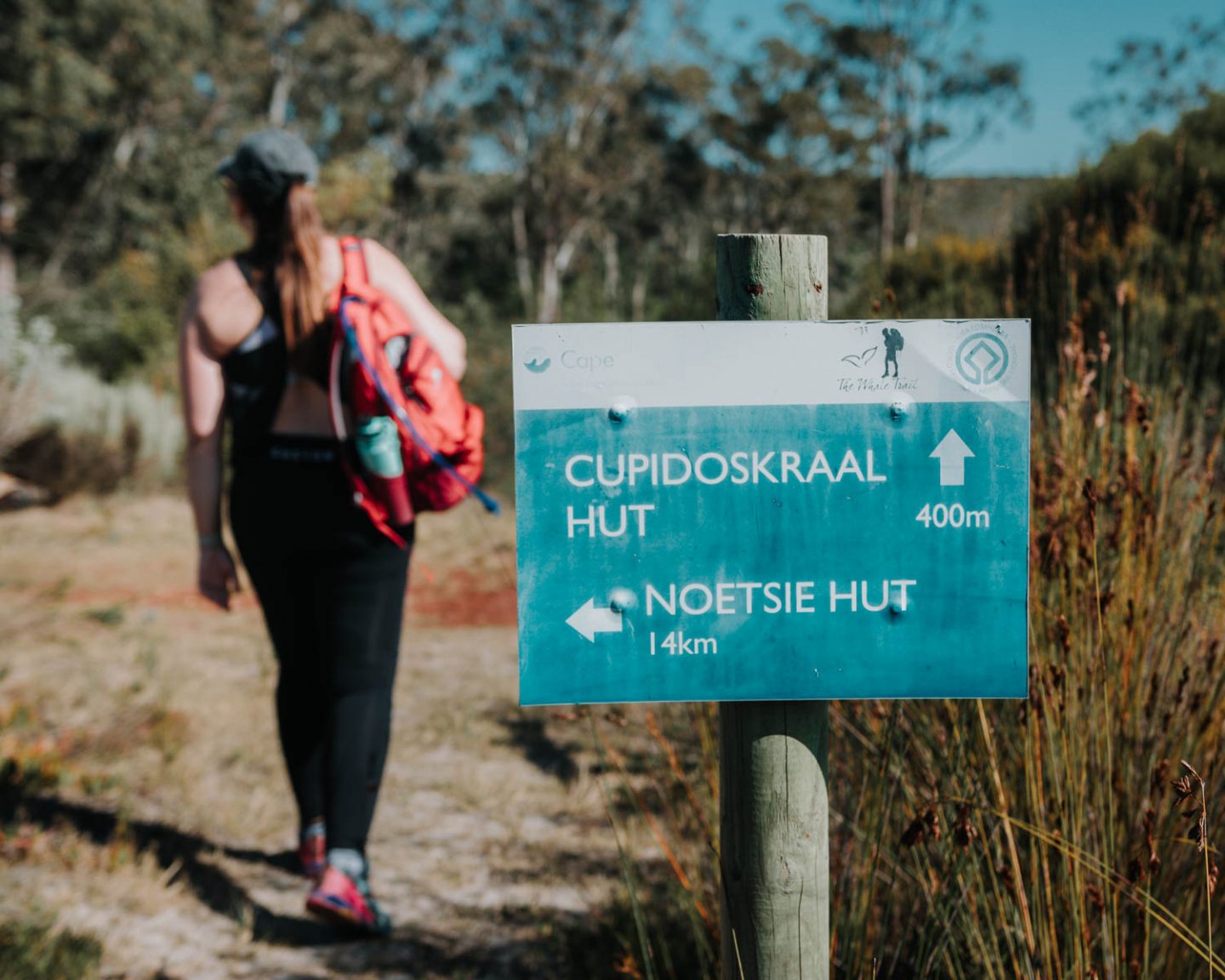
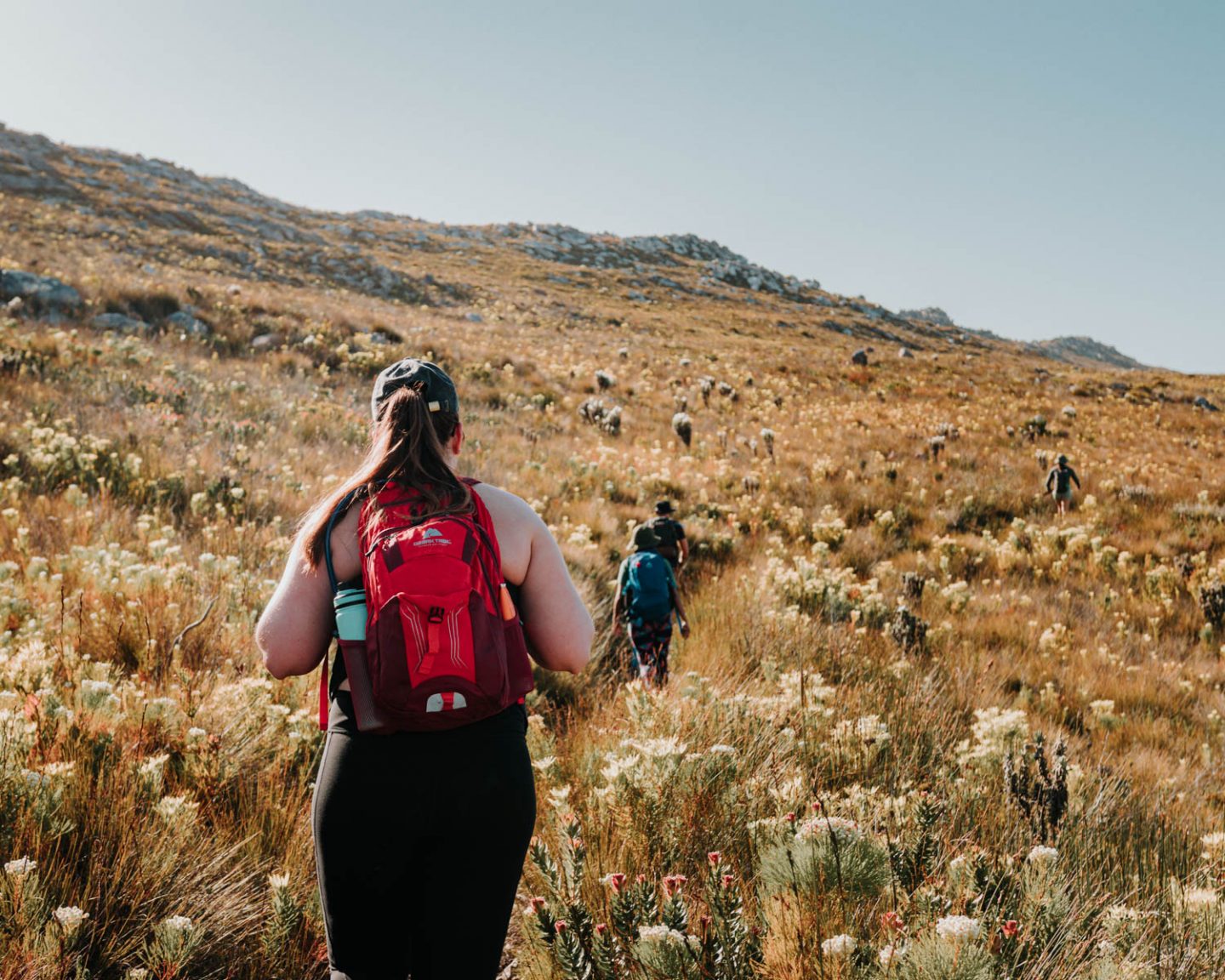
Day 1: Potberg to Cupidoskraal
- Distance: 15.5km
- Estimated Time: 8 hours
- Our Time: 6 hours
Day 1 is the toughest part of the Whale Trail.
Why?
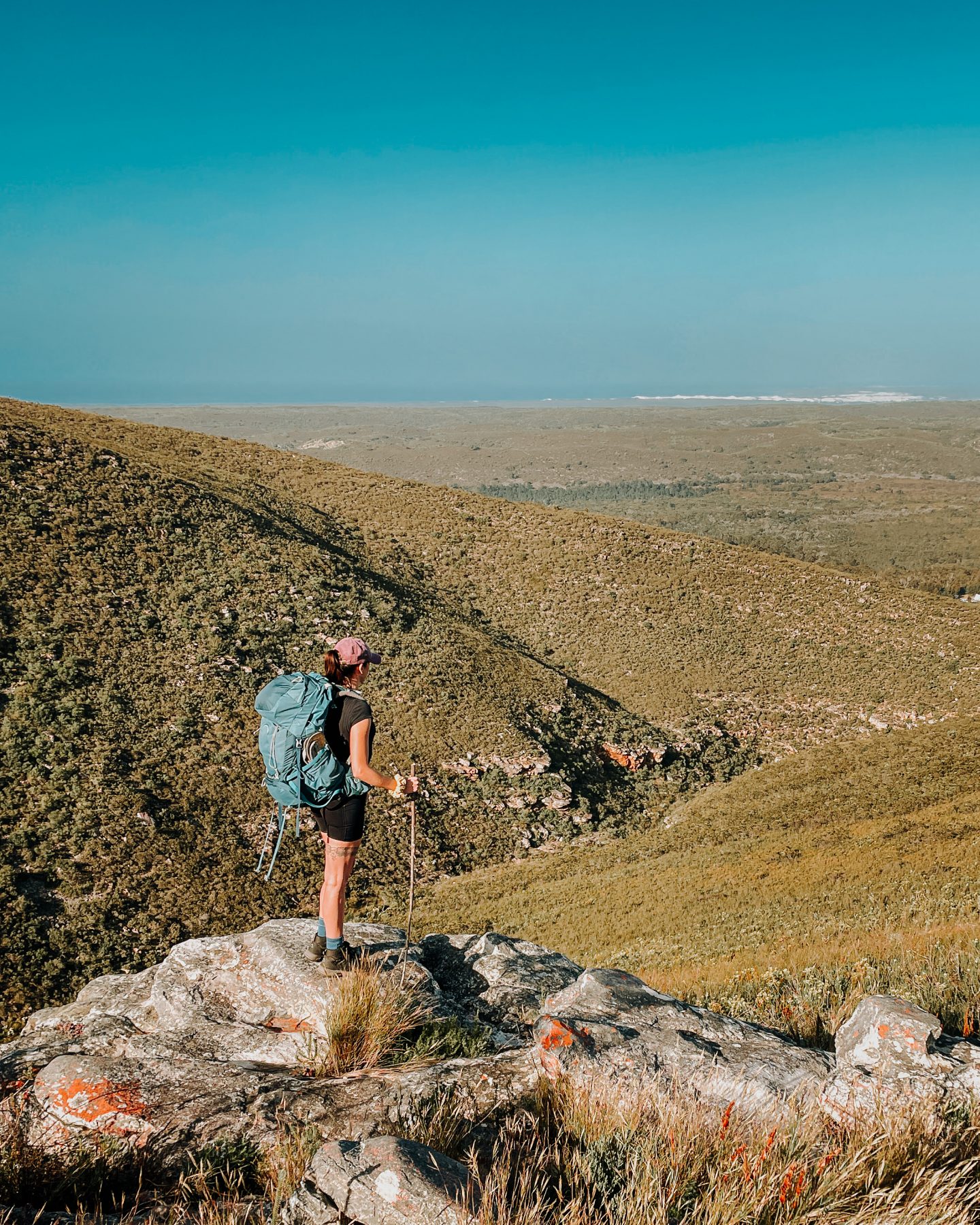
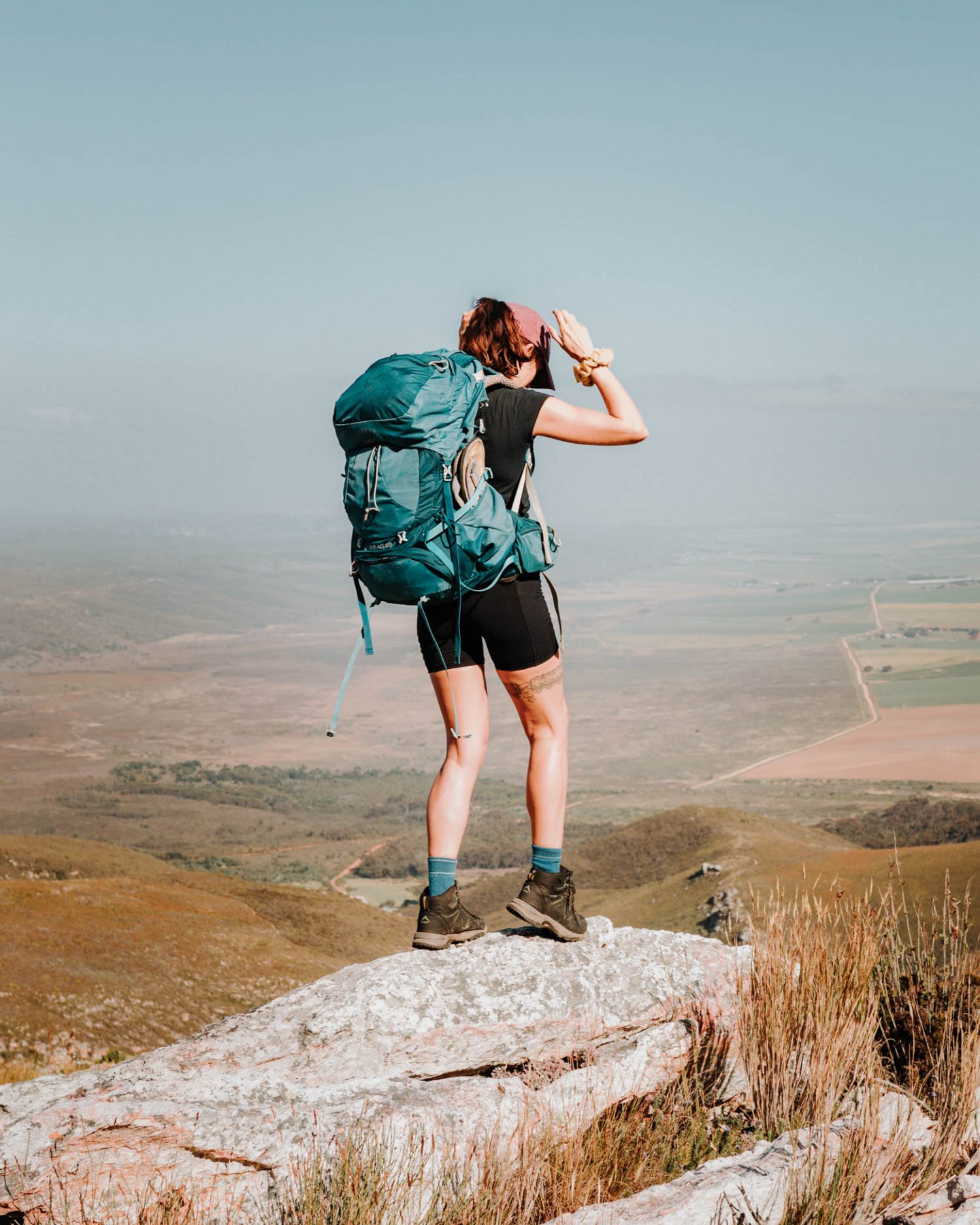
You need to hike to the top of Potberg Mountain (611 meters).
If you’re hiking in the warmer months, start the trail as early as possible to beat the heat of the day. If you’re hiking in winter or early spring, you can leave a bit later without worrying too much about the sun.
Once you summit, your reward is panoramic views of Swellendam, the Breede River, Cape Agulhas, and the glittering Indian Ocean.
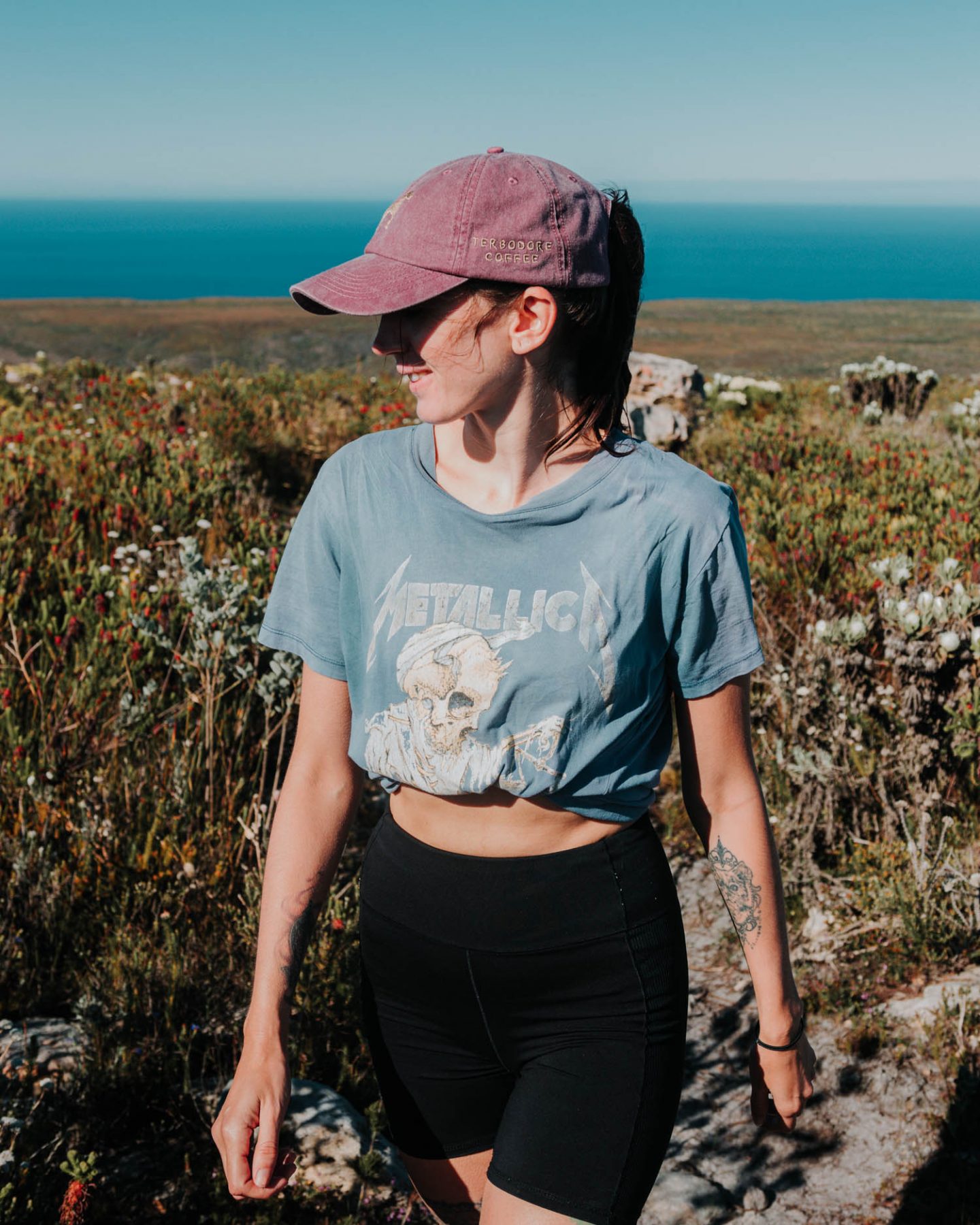
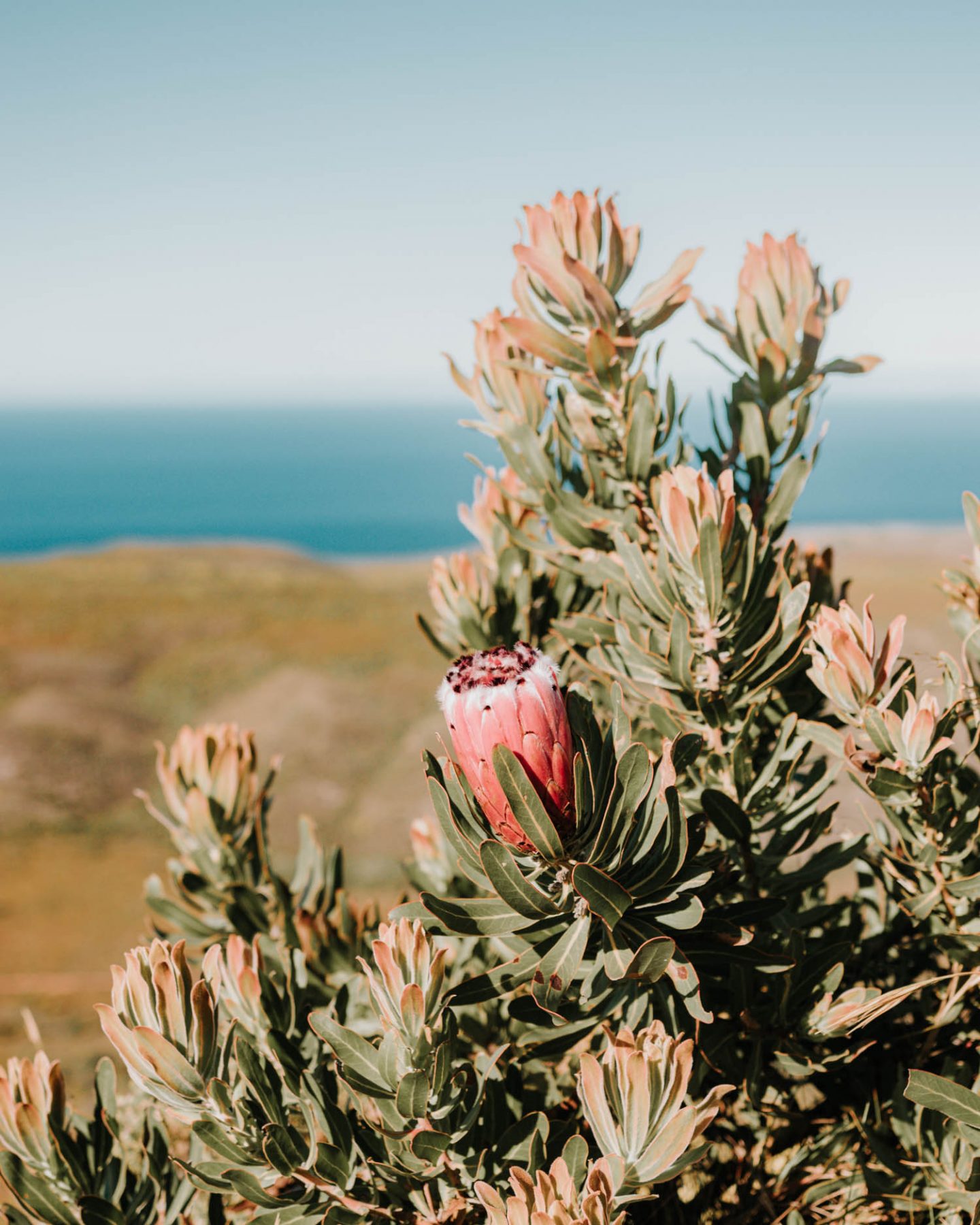
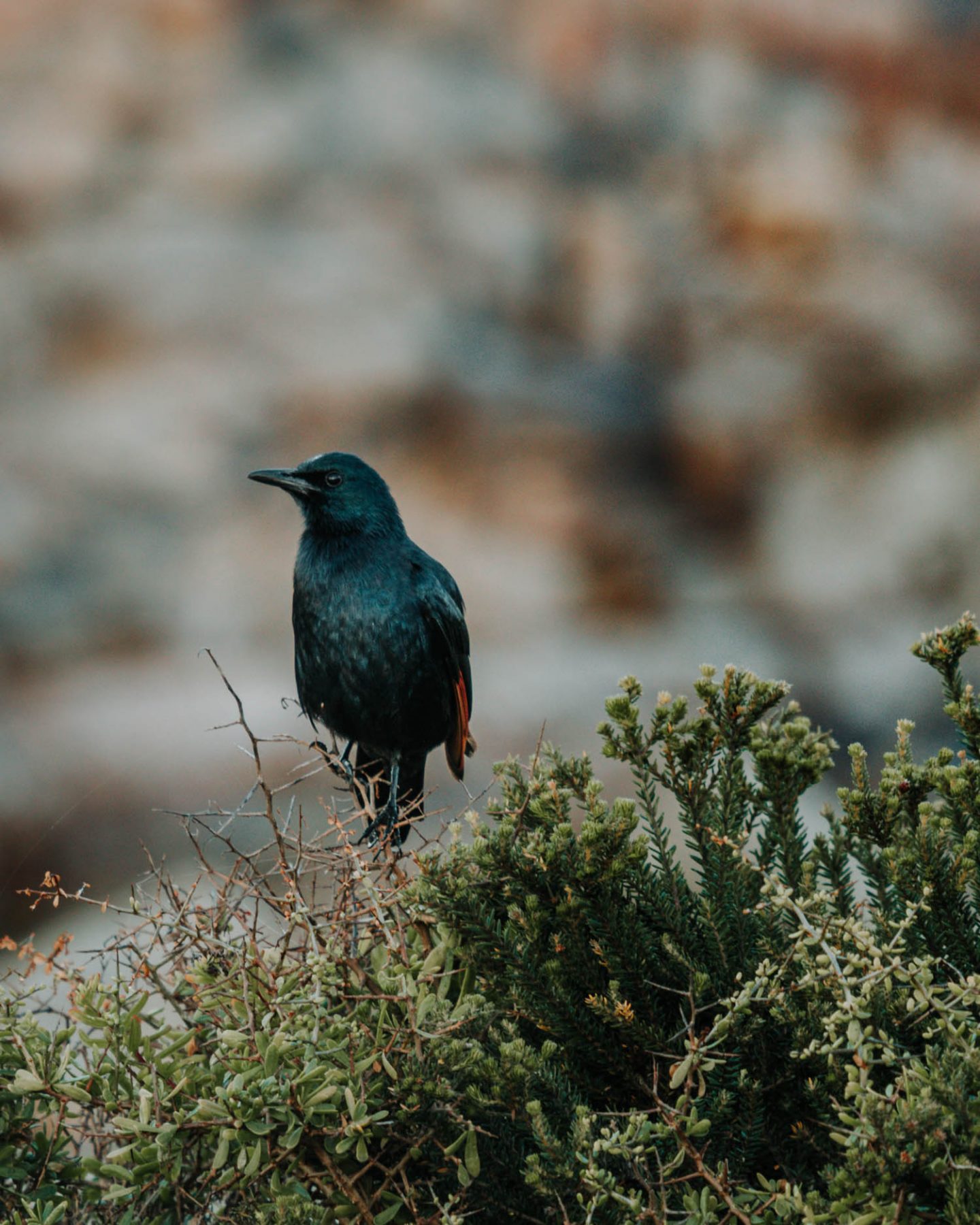
What to See: Erica and Protea species endemic to the reserve and the rare Cape Vulture.

Day 2: Cupidoskraal to Noetsie
- Distance: 15.2km
- Estimated Time: 8 hours
- Our Time: 6 hours
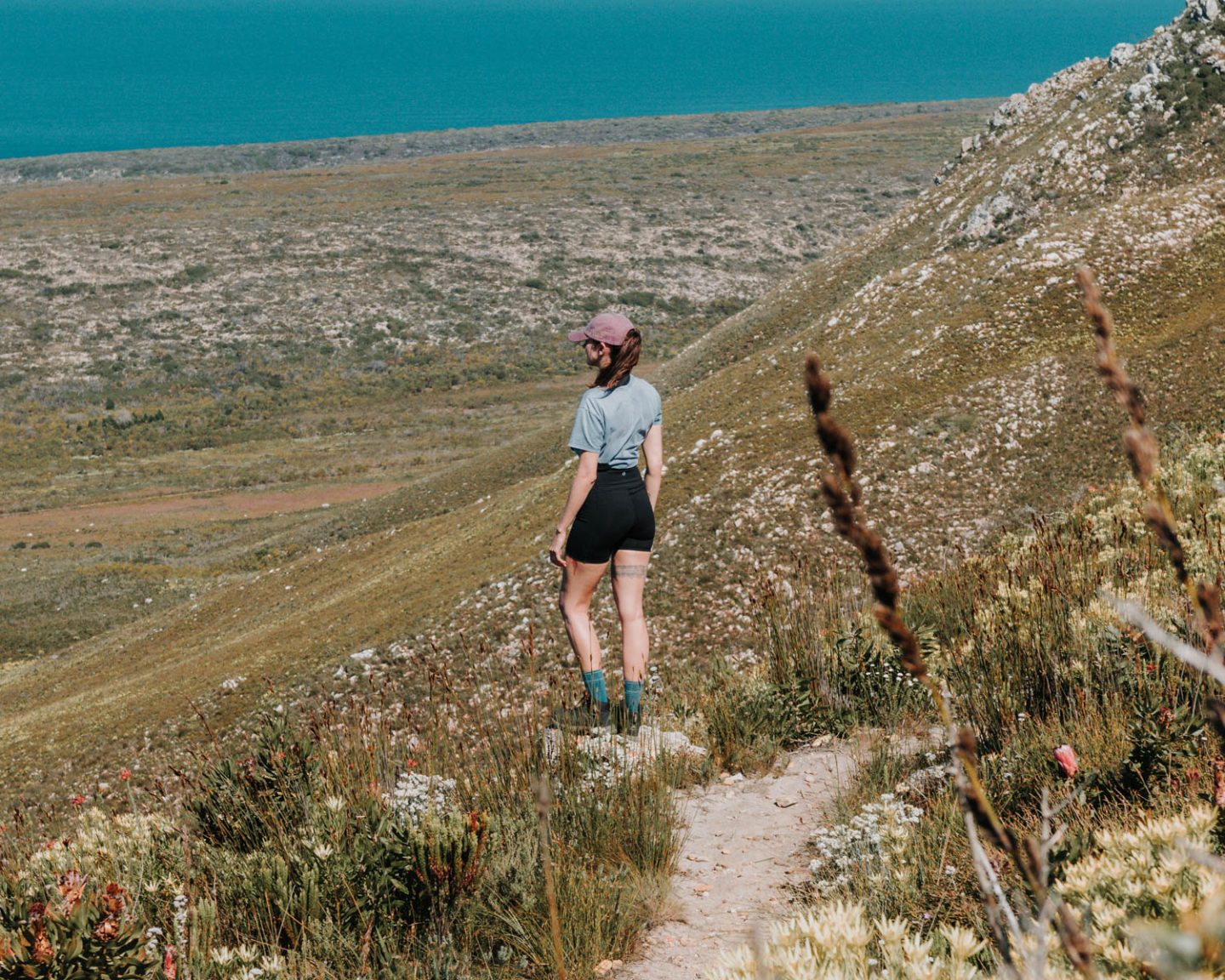
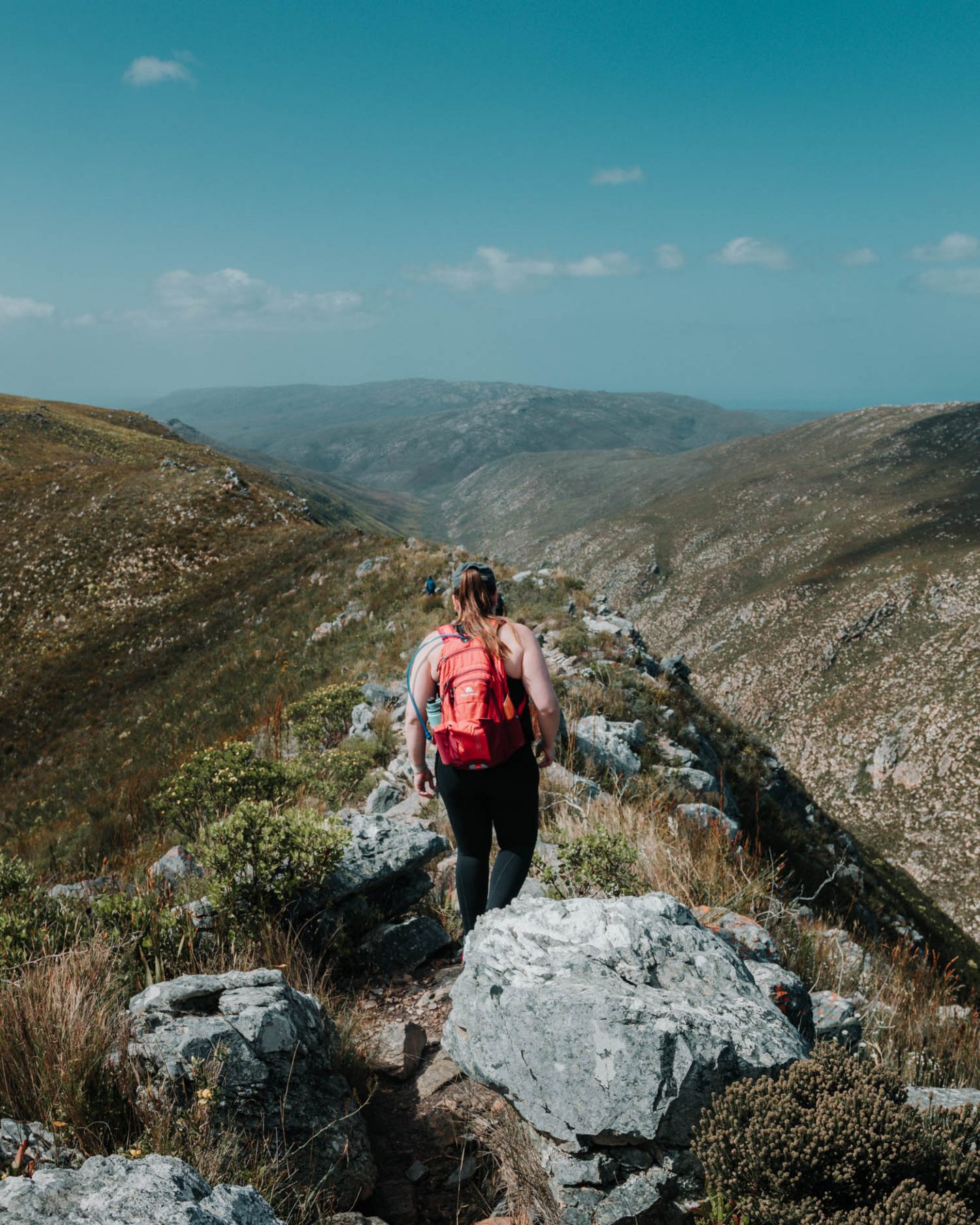
The second day isn’t as tough, but you’ll still have an incline to conquer right at the beginning. The trail takes you to the crest of the Potberg past beautiful fynbos and plenty of wildflowers (if you go in season).
Once you descend from the mountains, you’ll finally hit the coast and (hopefully) see your first glimpse of the southern right whales!
Look for leopard and other wild cat prints when you hit the beach. You can visit caves nearby if your feet aren’t too tired from smashing 30km in two days.
The Noetsie cottage was my favourite for the following reasons:
- The architecture is impeccable.
- The rooms are separate from each other, which creates more privacy.
- The boma area looks out onto the ocean.
- You can easily see the whales from the deck area.
- The scenery is jaw-dropping.
I would pay good money to come and stay at Noetsie for a week.
12/10 would recommend.
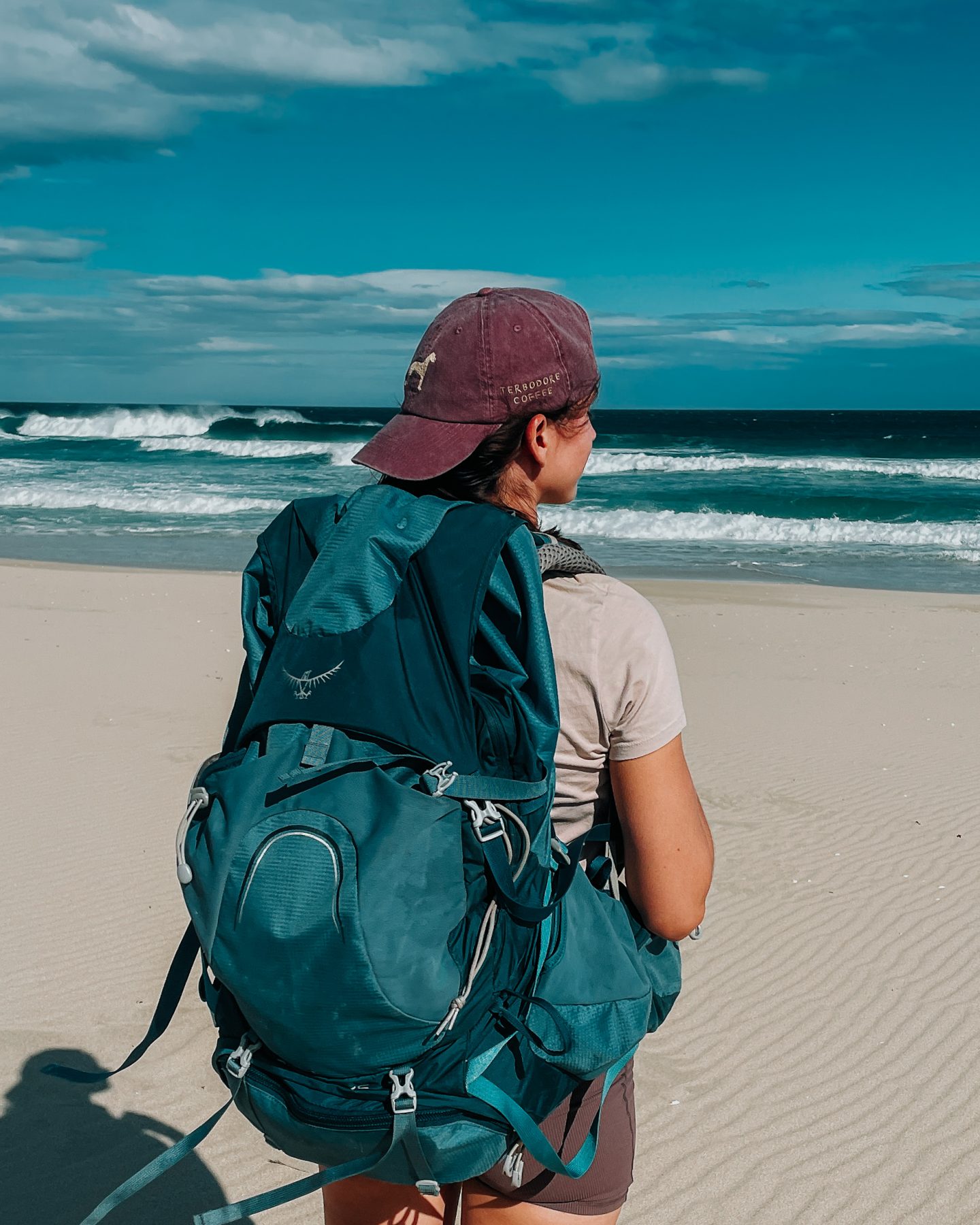
Day 3: Noetsie to Hamerkop
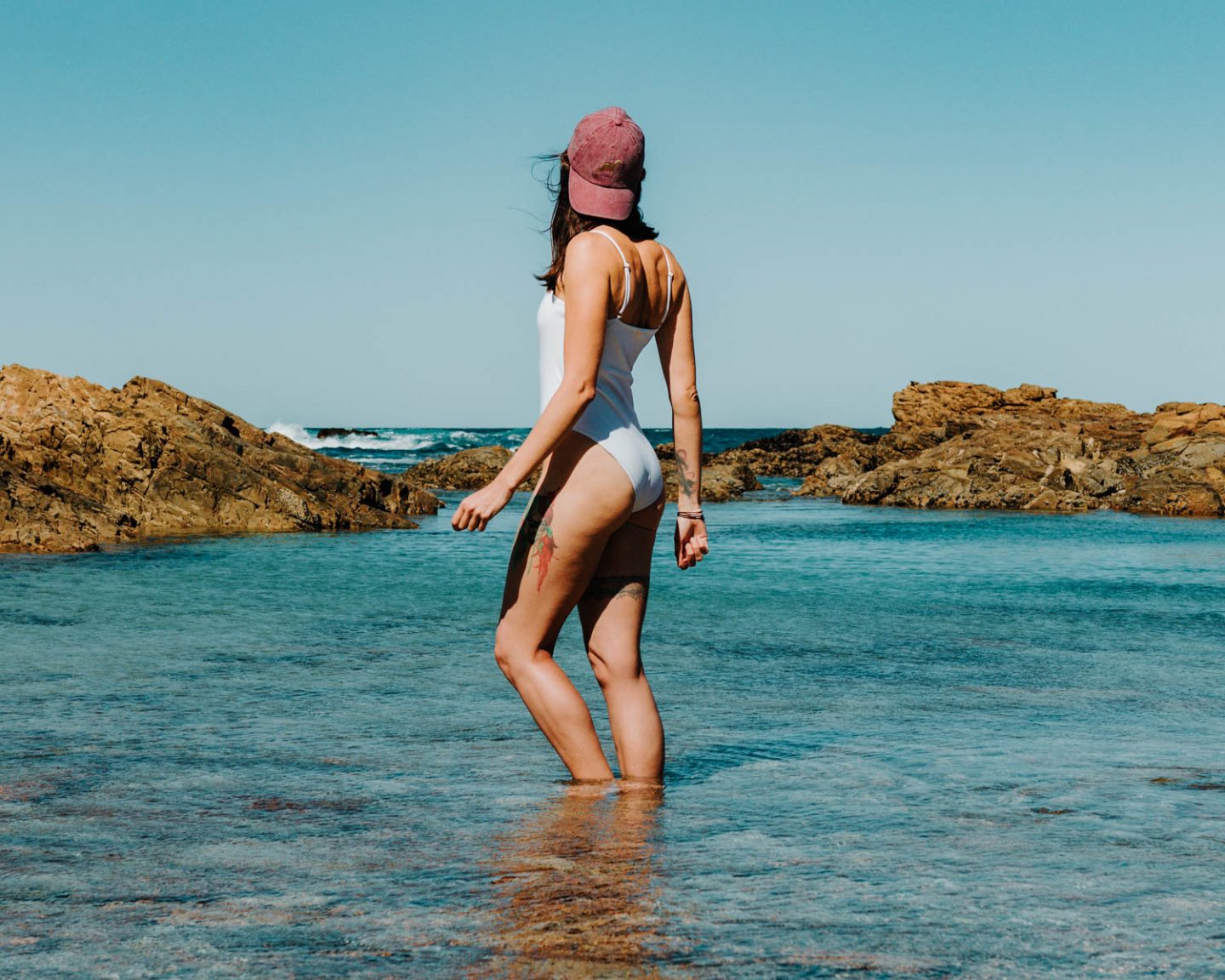
- Distance: 8.5km
- Estimated Time: 6 hours
- Our Time: 5 hours
Holy sh*t!
What a day. What a hike. What I’d give to live it on repeat.
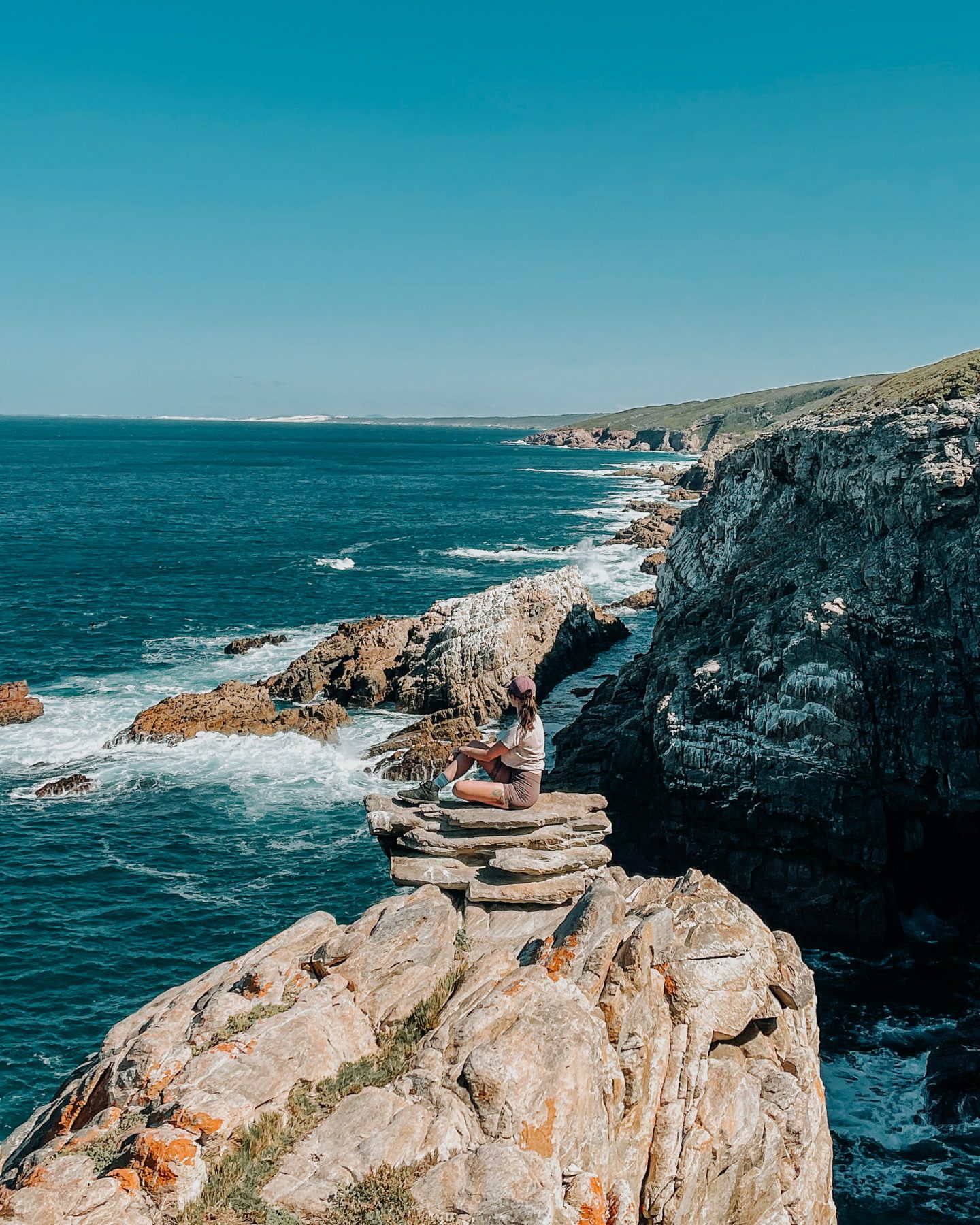
Hands down, day 3 of the Whale Trail is phenomenal. It has spectacular views that the rest of the hike could not compete with, in my opinion. As soon as I got to the top of the hill, I saw a silly amount of whales.
At one point, I wasn’t sure if I would make it to Hamerkop because I couldn’t stop taking photos. The calves were breaching, flipping their tails up, swimming on their sides, and having the best time.
But what made the day extra special were our animal guides. We had a group of six whales “walk” with us until we reached the rock pools.
While walking along the cliff path, you’re almost directly above the pods. If you take a photo, it almost looks like a drone shot.
It’s wild.
Day 4: Hamerkop to Vaalkrans
- Distance: 10.5km
- Estimated Time: 6 hours
- Our Time: 4 hours
Unlike the other days of the trail, we did not drag our feet.
Why?
The weather.
While we had perfect sunny days up until day 4, things took a turn for the worst. The wind picked up, temperatures dropped, and everyone wanted to get to Vaalkrans as quickly as possible.
That’s not all.
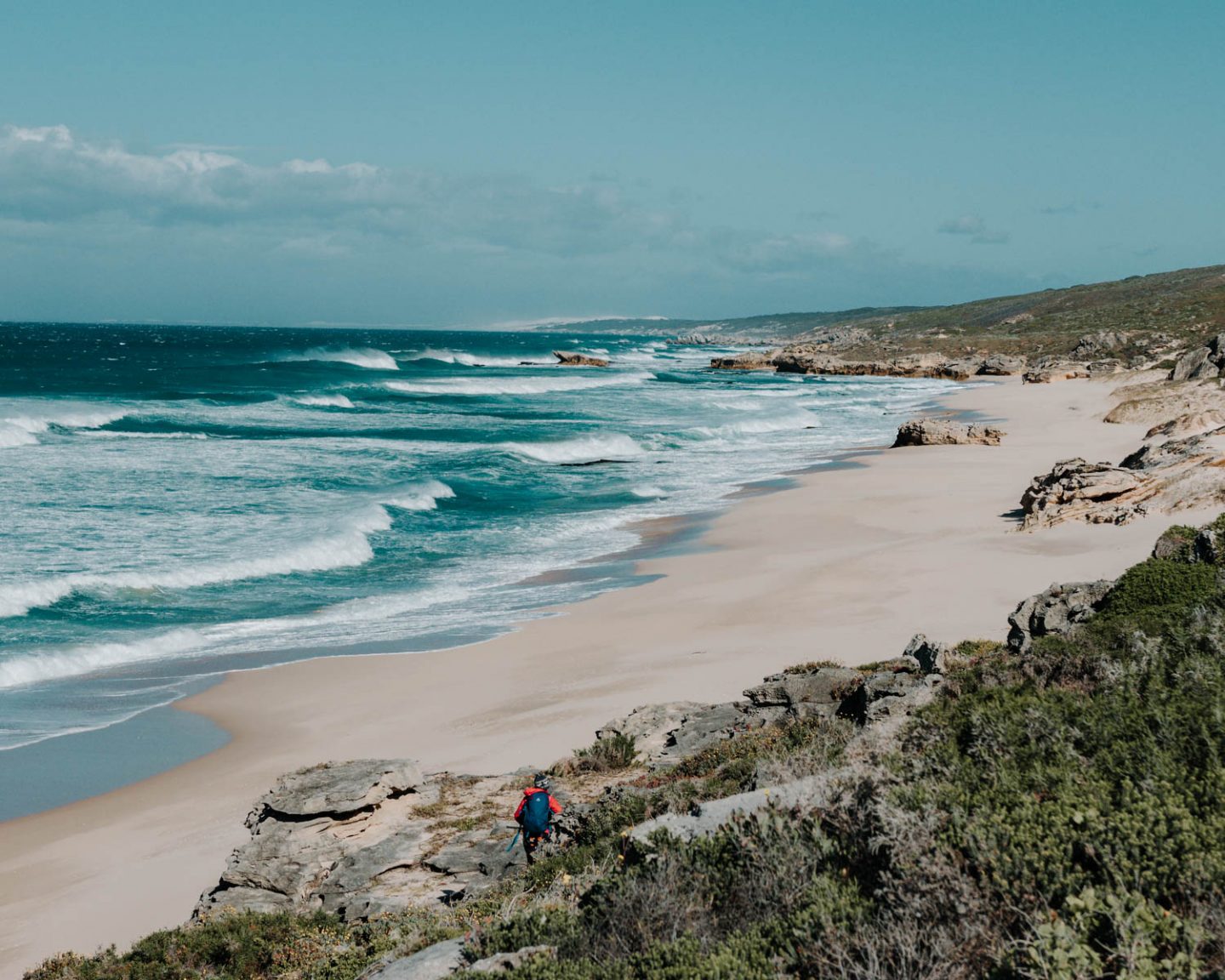
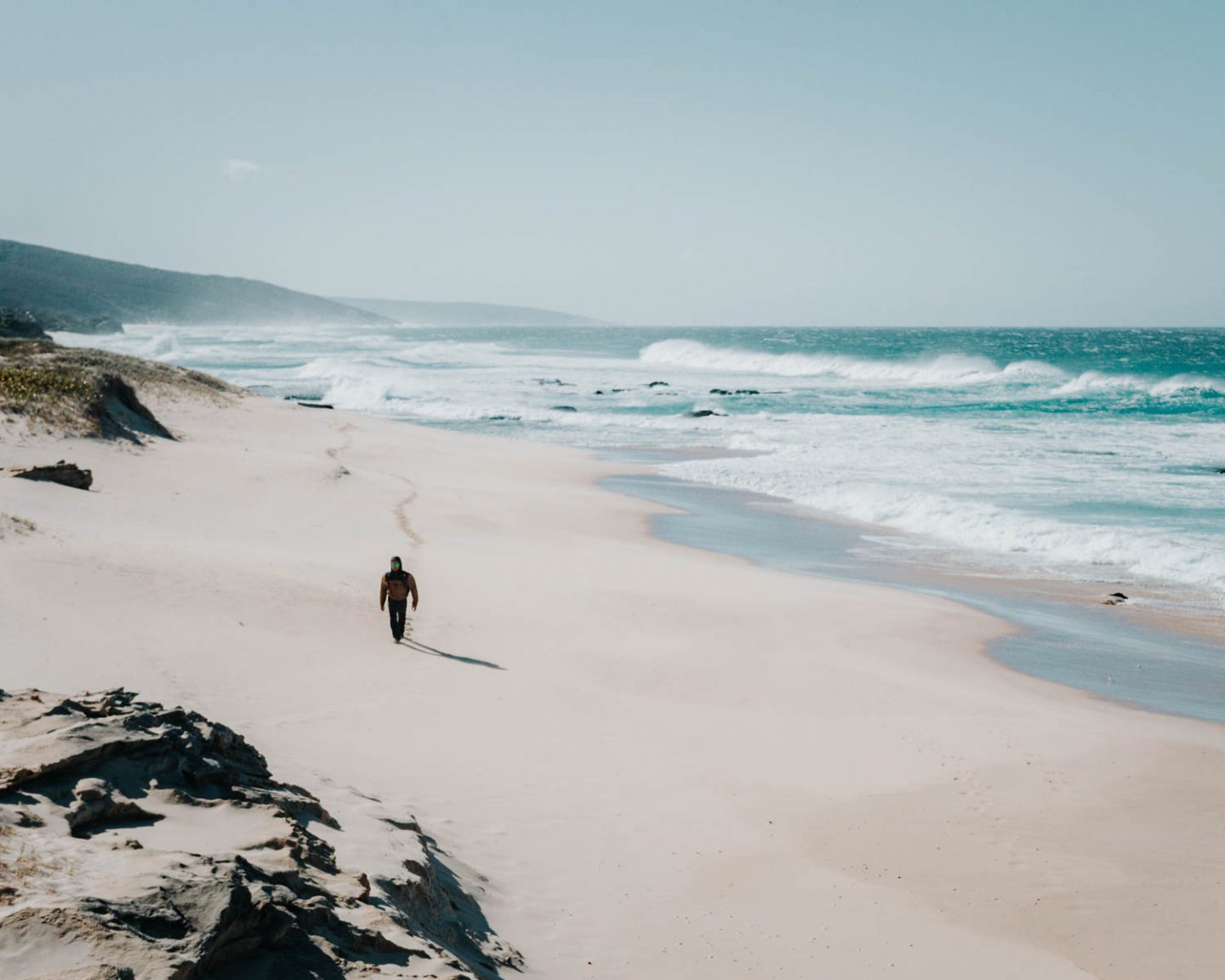
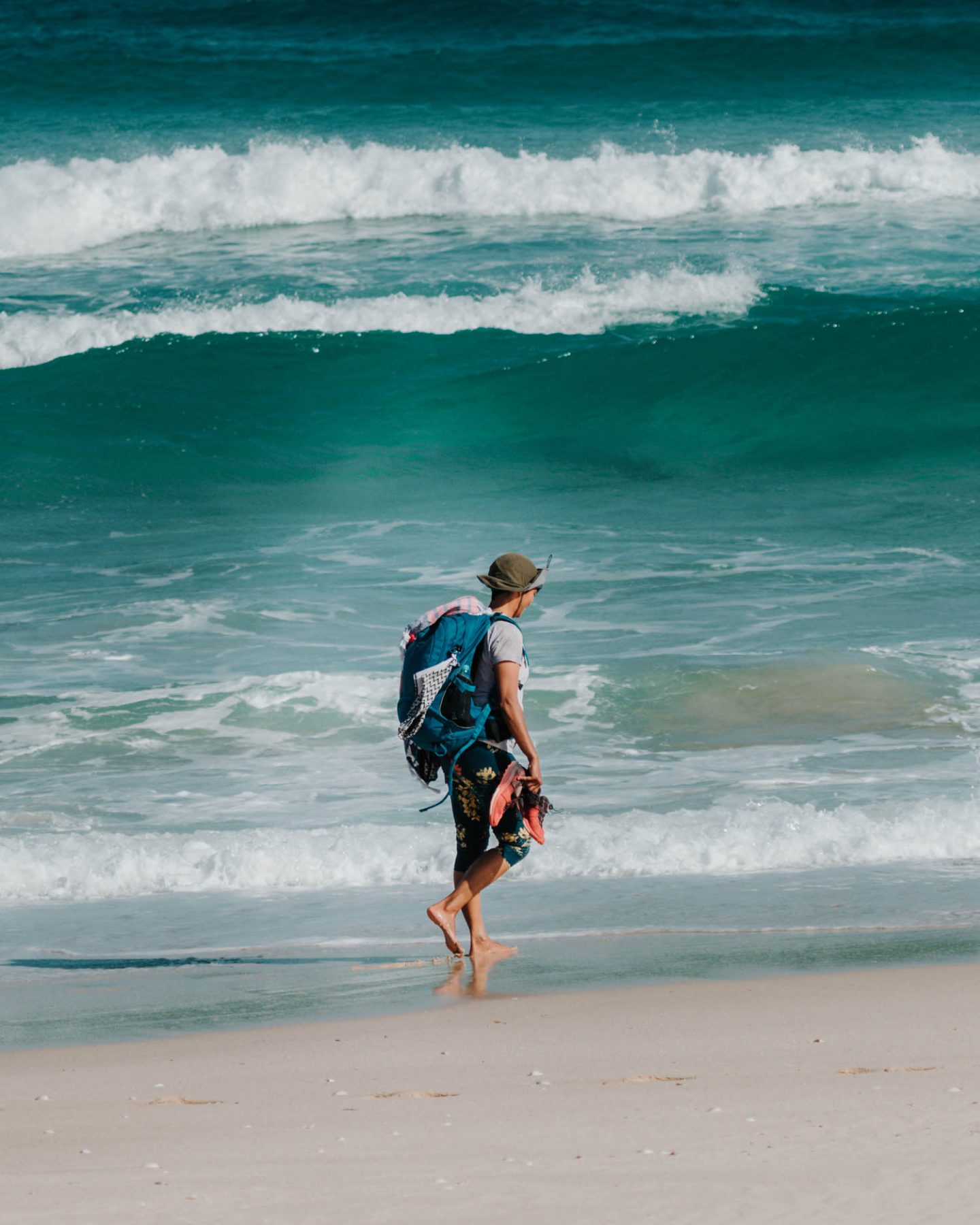
You do spend most of your time walking on beach sand. It’s strenuous, and when the wind kicks sand into your face, it’s even more unpleasant.
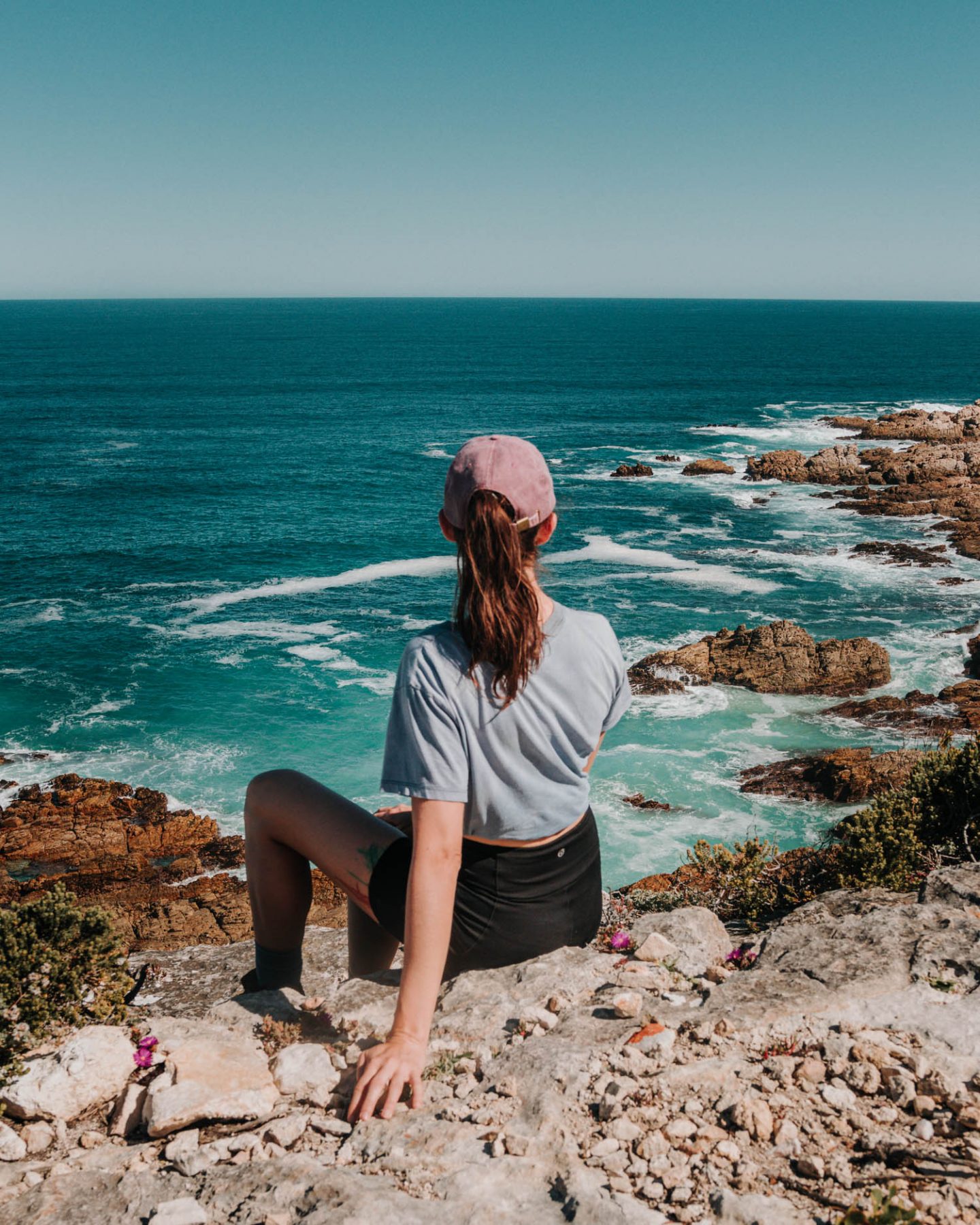
That said, the coastal scenery is beautiful if the weather is on your side, and you won’t want to rush these 10km.
Day 5: Vaalkrans to Koppie Alleen
- Distance: 7km
- Estimated Time: 6 hours
- Our Time: 3 hours
Whoop whoop!
The final day of the Whale Trail is here.
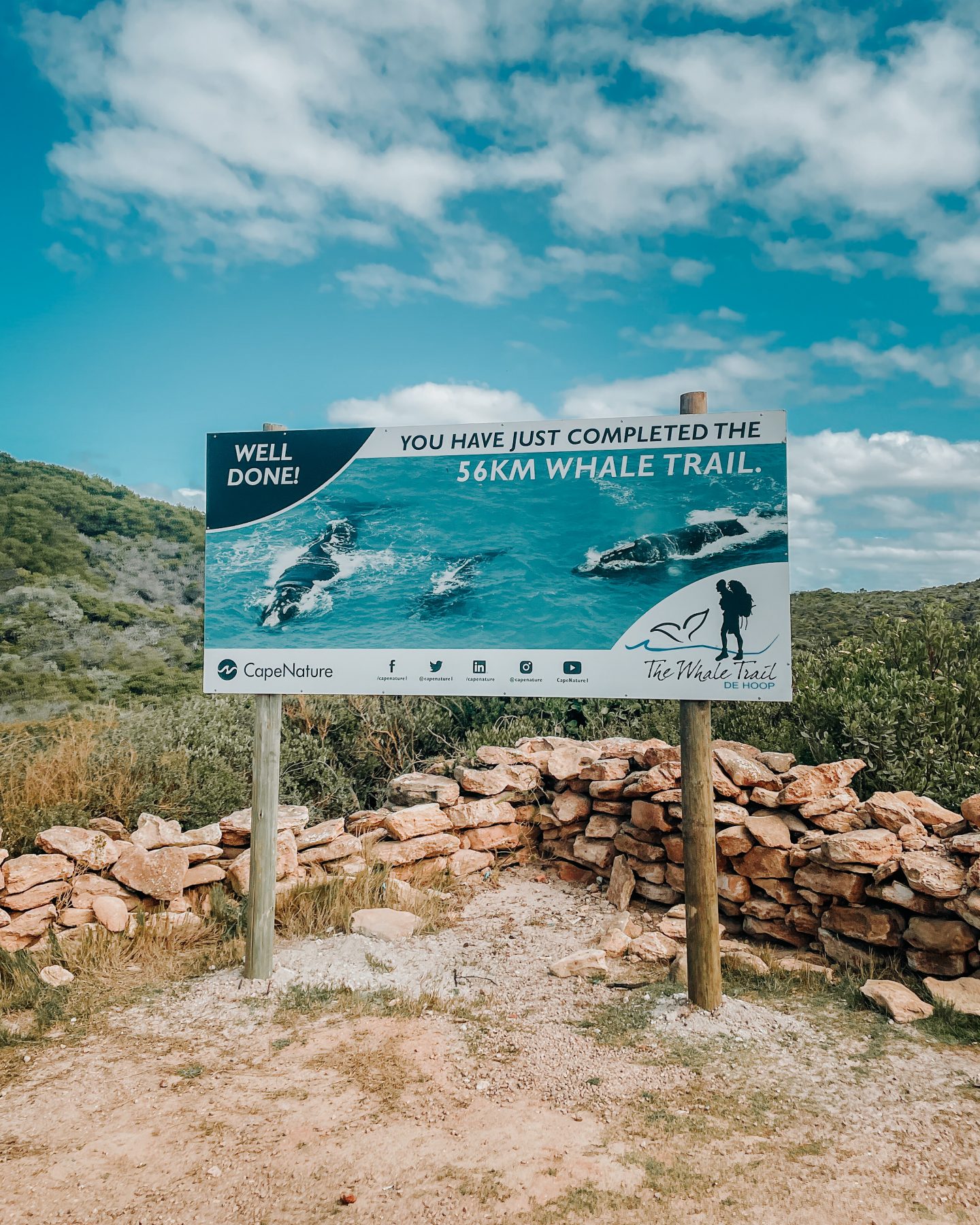
You only have 7km left to officially earn your bragging rights.
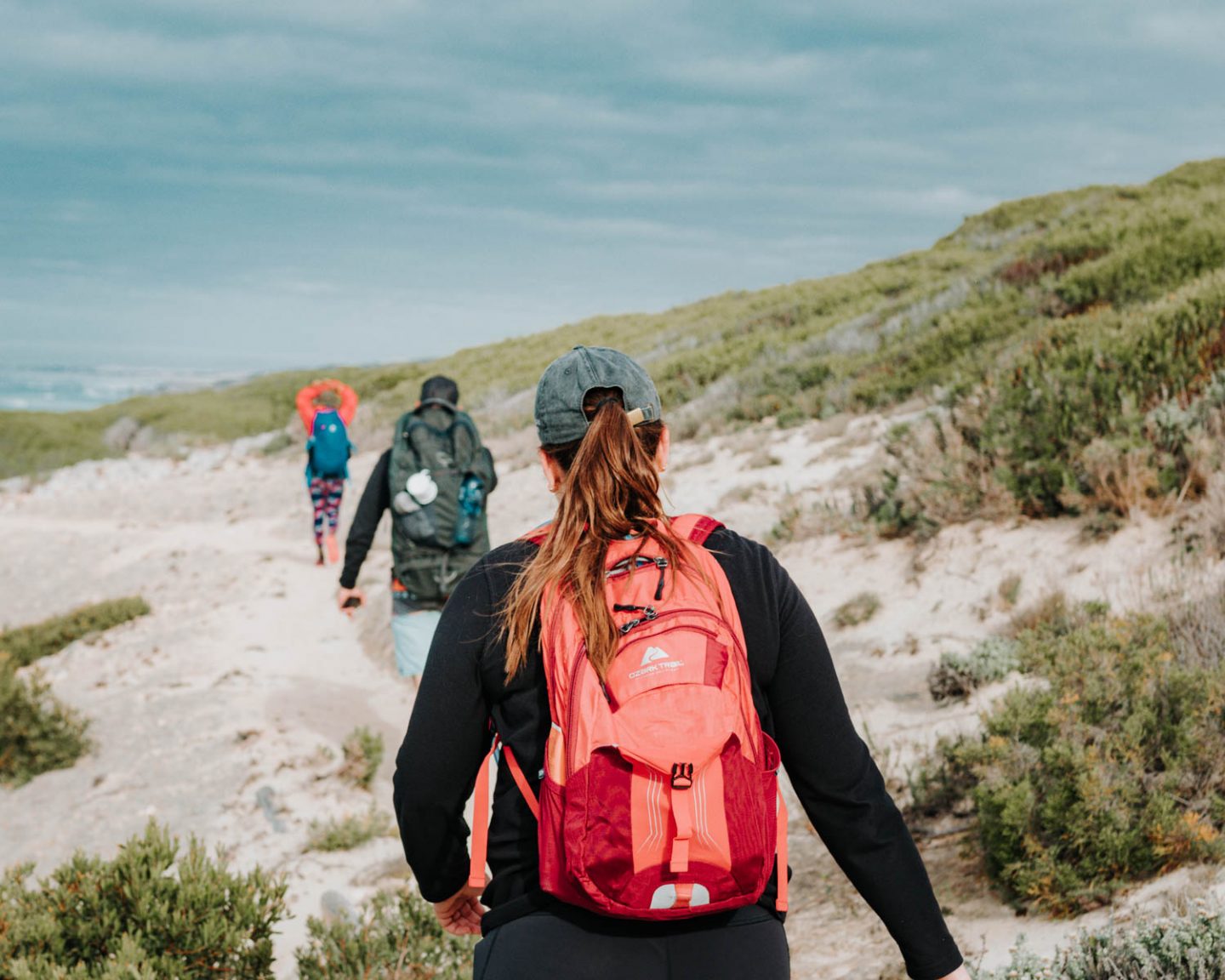
Again, we didn’t have the best weather on the last day. While the wind had died down, it was overcast, and temperatures were chilly.
If you’re there and the weather is warmer, leave the cottage early and spend a few hours swimming in the rock pools. When you’re done, hike the short distance to Koppie Allen, where the shuttle is waiting to take you back to the reservations office for your de-brief.
NB: You need to arrange a pick-up time for the shuttle before you leave the reservations office on Day 0.
Whale Trail Vs. The Otter Trail: Which One Is Better?
A tale as old as time…
In my humble opinion, I think the Whale Trail is better.
Sorry, not sorry.
Why though?
For three reasons:
- It’s waaaaay less strenuous: Unlike Otter’s inclines from hell that you have to conquer with a full backpack, Whale Trail, in comparison, is a gentle meander.
- It’s not as technical: You don’t need to rush to make low-tide to cross Bloukrans or use ropes to pull you up onto the rock.
- It’s unique: It’s not every day you get to experience world-class land-based whale watching while on a hike.
If you’re a hiker who doesn’t want to take the strain of a 15kg pack and want your creature comforts like hot water, delicious food every night and electricity, the Whale Trail hike is the way to go.
That being said, don’t sleep on the Otter Trail.
It’s a challenge, and you’ll need greater physical and mental endurance, but it’s worth it. While you won’t have whales, the technical part of the hike, as well as its diverse scenery and having to plan out the weight of your bag, is what makes the Otter Trail one of the top multi-day hikes in South Africa.
Do you have any questions about the Whale Trail hike or tips for your fellow hikers? Hit ya gurl up in the comments below!
If you like it, then you should put a pin on it!
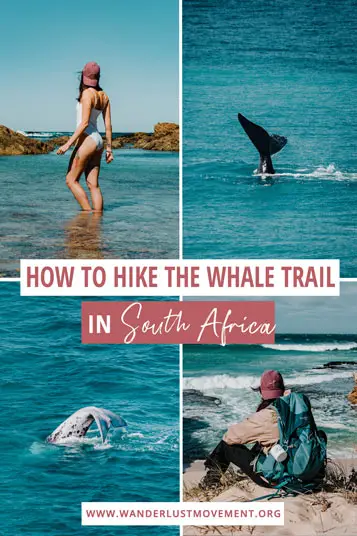
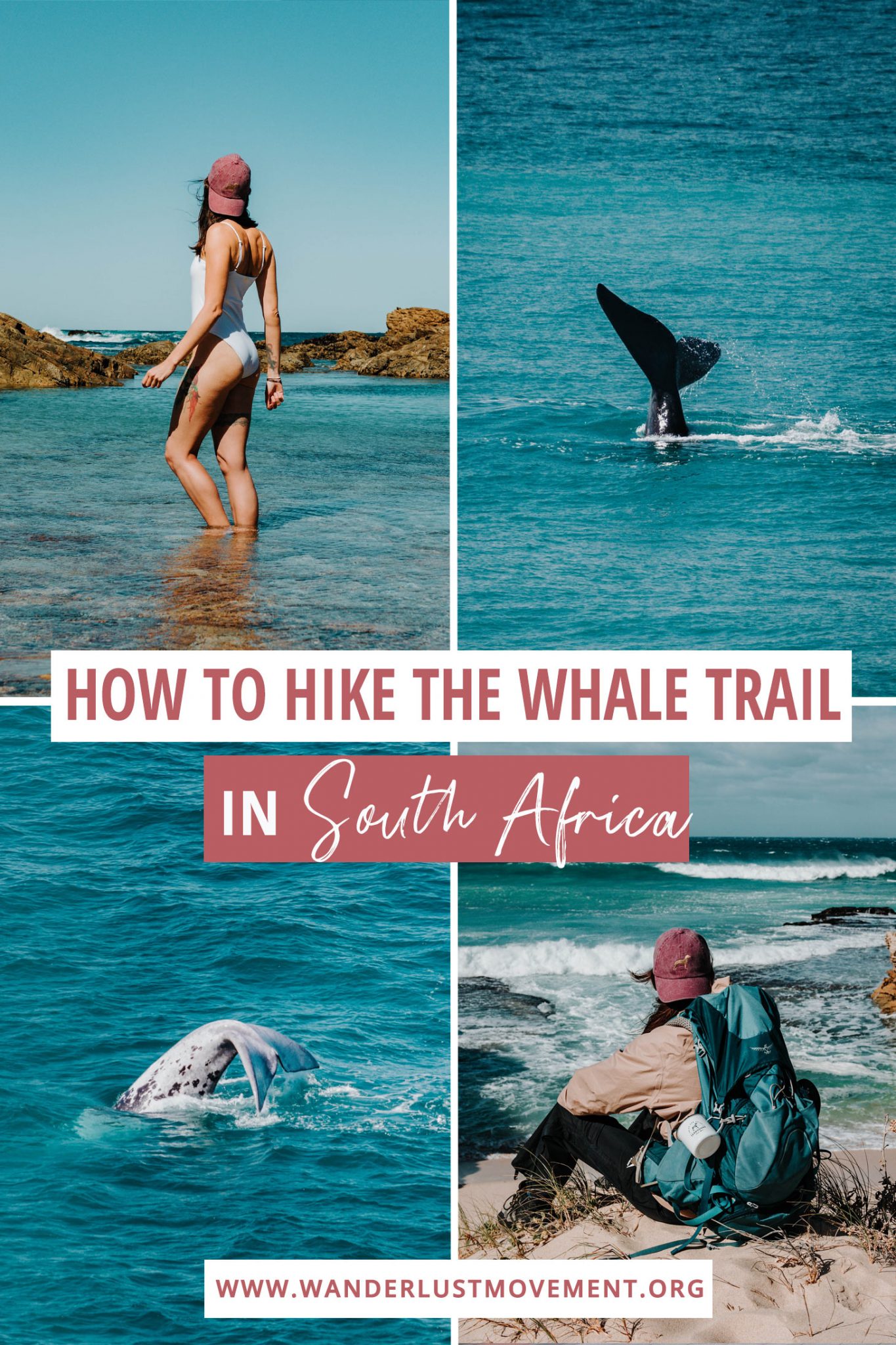
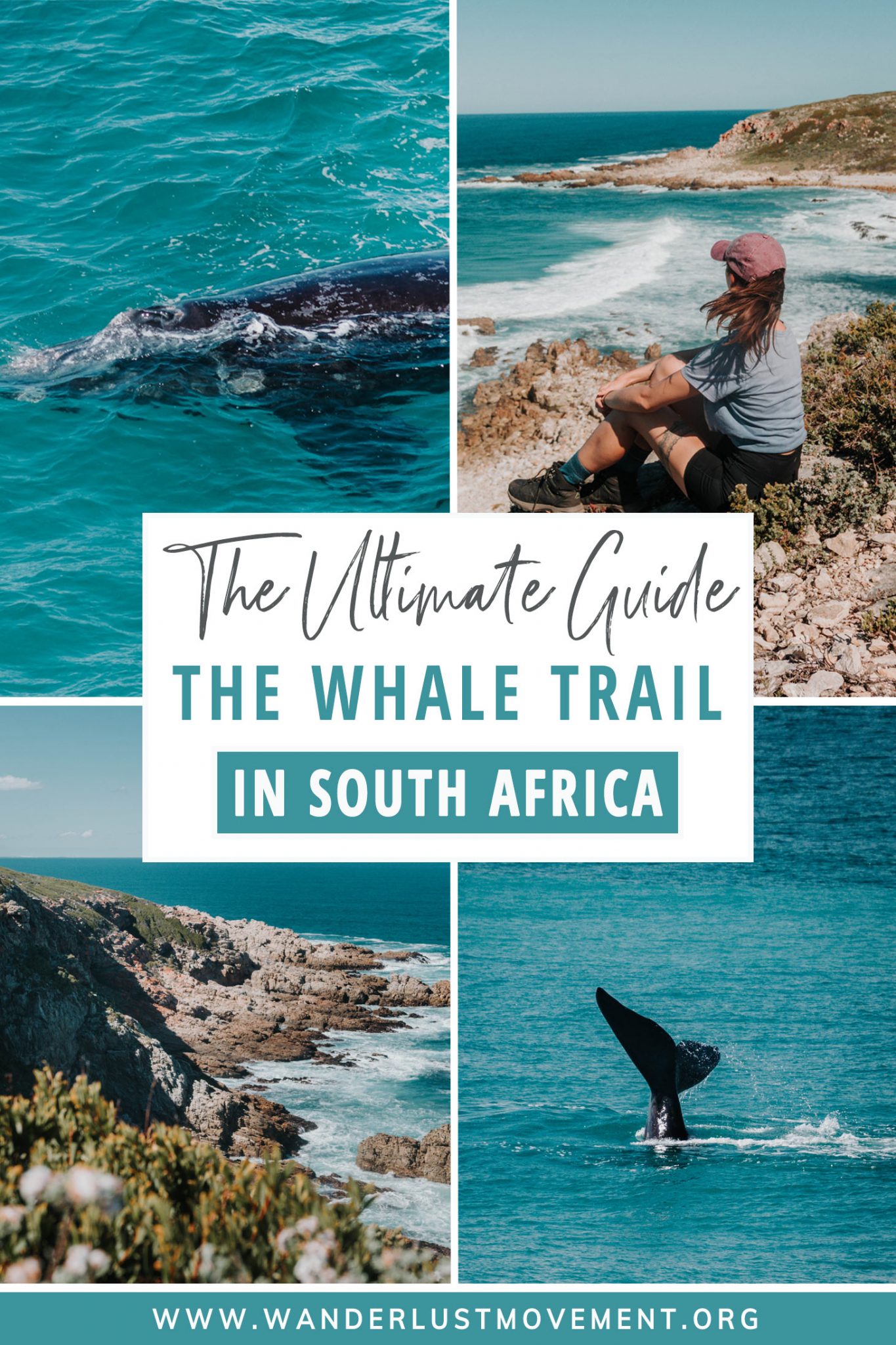



Awesome writing, detailed and informative
Most certainly makes me wanna book !
The information on the whale trail is excellent.
I love your style of writing.
You bring the reader into the conversation.
It will be nice to have pics on the first day hike.
I’m apprehensive about the incline on day 1.
What would August weather be like on the whale Trail. Do I sleep in tracksuits instead of PJs and is one pair of hiking shoes ok
Thank you for your info above on the Trail…really informative
hey kerry! i went in september, so i don’t have first-hand experience about the weather in august, but it will likely be a little bit colder as it’s still a winter month. and yes, you only need one pair of hiking shoes. i would sleep in whatever is going to be the most comfortable for you. the huts are well insulated, but i know i’m a lil bitch when it comes to the cold and would sleep in layers if i wasn’t warm enough. hope this helps!
I’m so excited for this 🙌🏻
We’re doing the trail in November. Been planning all year for this.
This will be my first multiday hike. Is there any crucial information I need for this hike?
Hello! I would say all the information in the blog post and you should be sorted.